Published: September 3, 2026 · Last updated: September 3, 2026
Who Runs Your Cloud After the Dev Agency Hands Off? What This Guide Covers
The invoice cleared. The final commit landed. The agency's Slack channel went quiet. Somewhere in your AWS console, a root account with nobody's phone number attached is still running your production database. Nobody actually decided who owns that. It just happened.
Why the Agency's Exit Is the Default, Not the Exception
Software agencies aren't cloud landlords. They're contractors, and contractors finish jobs.
Who runs your cloud after the dev agency hands off? For most founders and product leads at post-launch startups and lean SMBs, especially in fintech, health tech, and SaaS, where a broken handoff costs the most, the honest answer is: nobody decided, and that is the actual problem. The agency shipped what the statement of work described. Nobody's contract described who watches the AWS bill, rotates a leaked API key, or gets paged when the database fills up at 3am on a Tuesday.
This isn't a small niche problem. Gartner forecasts worldwide IT spending will hit $6.31 trillion in 2026, a 13.5% jump from 2025, with IT and cloud services alone accounting for $1.87 trillion of that, growing 9% year over year, and software spend climbing 15.1%. A meaningful share of that spend flows through exactly the kind of fixed-scope agency engagement that ends the day the product ships, not the day someone stops needing to watch it.
Agencies aren't being negligent when they move on. Most are staffed and priced to build, not to run infrastructure indefinitely, and their contracts usually say so in plain language if you go back and read the scope section. The problem is that almost nobody reads that section until the agency has already stopped answering Slack messages, at which point the question "who runs your cloud after the dev agency hands off" stops being theoretical and starts being an actual Tuesday.
What "Cloud Handoff" Actually Means
Cloud handoff is the process of transferring full operational and administrative control of a product's hosting, infrastructure, and related accounts from the agency that built it to the client who owns it. Done properly, it moves control of seven things at once: the cloud account itself, the code repository, domain and DNS, secrets and API keys, the CI/CD pipeline, monitoring and alerting, and any third-party accounts tied to the product.
Most agencies hand off the code. Almost none hand off all seven without being asked directly, in writing, before the final invoice is paid.
The gap almost always shows up in the same place: the agency created the AWS, Azure, or Google Cloud account under its own organization or its own email address because that was the fastest way to start building on day one. Nobody circled back to re-parent it. A domain gets registered through the agency's registrar account. A Stripe account gets created with the agency's team as the technical owner because someone had to set up webhooks that week. None of this is malicious. It's just what happens when nobody assigns "own the handoff" as an explicit deliverable.
- Cloud account. Root or organization-level access to AWS, Azure, or Google Cloud, with billing reassigned to your company's payment method.
- Code repository. Full admin rights on GitHub, GitLab, or Bitbucket, with the agency's personal accounts removed from write access.
- Domain and DNS. Registrar login and DNS zone control, so a lapsed relationship never means a lapsed domain.
- Secrets and API keys. Every third-party credential (payments, email, SMS, maps, AI providers) rotated and stored in a vault you control.
- CI/CD pipeline. Deployment configuration and pipeline ownership, not just the ability to read the workflow file.
- Monitoring and alerting. Dashboards, uptime checks, and error tracking pointed at an inbox someone on your team actually reads.
- Third-party accounts. Payment processors, app store developer accounts, and analytics platforms transferred to your organization's identity, not a personal one.
The Cloud Ownership Audit: Who Controls What Right Now?
A cloud ownership audit is a line-by-line check of every account, credential, and service tied to your product, confirming whether your company or the agency currently holds administrative control of each one. Run it before you agree the engagement is finished, not after the agency has stopped responding.
The table below is the audit itself. Go through it with whoever on your team has the most technical context, and mark each row honestly. A "not sure" answer counts as "the agency controls it" until proven otherwise.
| Asset | Typically controlled by | Risk if left with the agency | What good ownership looks like |
|---|---|---|---|
| Cloud account (root) | Agency, by default | Agency can suspend, change, or lock you out of production | Root/organization owner is your company's own email, MFA enrolled to your team |
| Code repository | Often shared | Agency retains write or admin access after the relationship ends | Only your team holds owner/admin roles; agency accounts removed, not just demoted |
| Domain and DNS | Frequently the agency's registrar login | Site or email can go dark if the agency account lapses or is deleted | Registrar account and DNS zone under your company's name and payment method |
| Secrets and API keys | Rarely rotated | Former contractors retain working credentials indefinitely | Every key rotated at handoff, stored in a vault your team controls |
| CI/CD pipeline | Configured by the agency | Deploys can silently fail once agency-owned service accounts expire | Pipeline reassigned to a service account your team owns and monitors |
| Billing alerts | Often routed to the agency | You find out about a cost spike weeks later, if at all | Budget alerts and invoices routed to a finance inbox your team checks daily |
If more than one or two rows come back "agency controls it," that is not a minor cleanup task. It means the handoff, whatever the contract called it, has not actually happened yet.
Five Ways to Run Your Cloud After the Agency Leaves
There is no default correct answer here. There is only the answer that matches how much this product actually needs to stay up, and how much internal muscle you actually have.
The five realistic paths after a dev agency exits are: leaving things as they are, paying the original agency for an ongoing retainer, hiring an in-house cloud or DevOps engineer, bringing on a managed cloud partner, or self-managing with your existing founding team. Each trades off control, cost, and response time differently.
| Model | Best for | The trade-off |
|---|---|---|
| Do nothing | Nobody, honestly | Works until it doesn't, then it fails at the worst possible time with no one on call |
| Retainer with the original agency | Teams who trust the agency and mainly need small fixes | Priority competes with the agency's new client work; response times vary |
| In-house DevOps hire | Companies with enough infrastructure to justify a full-time salary | Highest control, highest fixed cost, and a single point of failure if that person leaves |
| Managed cloud partner | Teams that want senior coverage without a full-time headcount | Shared coverage model; requires a partner who documents what they do |
| Self-manage as founders | Very early, pre-revenue products with simple infrastructure | Cheapest short term, expensive the first time something breaks that nobody understands |
For most companies past the earliest MVP stage, a managed cloud services partner ends up the practical middle ground: it gives you senior-level coverage for incidents and cost governance without the fixed overhead of a full-time hire, and unlike a retainer with the original builder, the engagement is explicitly scoped around ongoing operations rather than squeezed in around new client work.
The Red Flags That Mean the Agency Never Actually Let Go
Six signs reliably predict a handoff that looks finished on paper but isn't finished in practice. If two or more of these are true right now, treat the ownership audit above as urgent, not optional.
- A shared root login. If the cloud account password is something both sides "have," nobody actually owns it.
- One person is the entire runbook. If only one developer at the agency understands how deploys work, you don't have a documented system, you have a dependency on a person.
- No infrastructure as code. If the environment was clicked together in a console with no Terraform or CloudFormation record, rebuilding it after a mistake means guessing.
- Orphaned IAM users. Former contractor accounts that were never deactivated are one of the most common findings in a post-handoff security review.
- No written runbook. If "how do I deploy a hotfix" only lives in someone's memory, it isn't documented, it's tribal knowledge that walks out the door.
- Billing alerts still route to the agency. If a cost spike notifies them before it notifies you, you've outsourced awareness of your own bill.
What an Unmanaged Cloud Environment Actually Costs You
An unmanaged cloud environment costs money in two separate ways: wasted spend on resources nobody is optimizing, and outsized damage from a security incident nobody is watching for. Both compound quietly until a founder opens a bill or an incident report and asks how it got this bad.
The security side is worse. IBM's Cost of a Data Breach report puts the global average cost of a breach at $4.99 million, a record high, and Verizon's 2026 Data Breach Investigations Report found that 31% of breaches now start with an exploited software vulnerability, ahead of stolen credentials for the first time. An environment nobody patches or monitors after handoff is exactly the kind of target that shows up in next year's version of that same report.
Translating that into practice usually means automated cost anomaly detection and continuous vulnerability scanning rather than a person manually checking a dashboard once a month, which is the kind of AI-assisted monitoring work our custom AI development services get asked to build once a client has lived through one unpleasant surprise on their bill.
What a Clean Handoff Package Should Include
A clean handoff package is a specific set of five deliverables an agency should hand over before the engagement closes: documentation, a credentials vault, infrastructure as code, monitoring configuration, and a cost baseline. Ask for all five by name; a verbal "yeah, you'll have access to everything" is not a handoff package.
- Docs and runbooks. An architecture overview, a deployment runbook, and a dependency list with versions, written for whoever picks this up next, not for someone who already knows the system.
- Credentials vault. Every rotated secret, API key, and login handed over through a password manager or secrets vault, never a spreadsheet or a shared chat thread.
- Infrastructure as code. A Terraform, CloudFormation, or equivalent repository that can rebuild the environment from scratch if it ever needs to.
- Monitoring and alerts. Working dashboards and alert rules pointed at an inbox or channel your team checks, not the agency's.
- Cost baseline. A snapshot of what "normal" spend looks like, so a spike is obvious to whoever inherits the bill instead of invisible until it triples.
Ask for a short recorded walkthrough on top of the written docs. Fifteen minutes of someone actually clicking through the console and narrating "this is where X lives, this is what Y depends on" catches gaps that a written doc alone tends to miss, and it costs the agency almost nothing to record before they move on.
Who Legally Owns the Code and Infrastructure After Handoff?
In the United States, code written by an independent contractor or agency belongs to the contractor by default, not the client, unless a written agreement explicitly assigns ownership to the client. This surprises a lot of founders who assumed that paying for the work meant automatically owning it.
The U.S. Copyright Office's Circular 30 lays out the rule: for an independent contractor's work to count as "work made for hire," it must fall into one of nine narrow categories and be covered by a signed written agreement that expressly says so. General custom software development typically does not fall into those categories, which means the default rule (the creator owns it) applies unless your contract says otherwise in writing.
The wording matters more than most contracts treat it. "The developer agrees to assign the code" is a promise. "The developer hereby assigns the code" is a transfer that already happened.
That distinction, a present-tense assignment versus a future promise to assign, is the difference between owning your code today and having a contractual claim you would need to enforce later. If your agreement with the agency doesn't use clear present-assignment language, or if there was never a signed agreement at all, it's worth a short conversation with a contracts or IP attorney before you assume ownership is settled. This is general information, not legal advice specific to your situation, and the details vary by jurisdiction and by exactly what your contract says.
Matching the Ownership Model to Your Company's Stage
The right answer from Section 4 changes as the company changes. A model that made sense for a two-person pre-seed team looks reckless once you're processing real customer data at scale, and a model built for a regulated growth-stage company is overkill for an MVP still looking for product-market fit.
| Stage | Signals | Fits best |
|---|---|---|
| Pre-seed / MVP | Few users, simple architecture, validating the idea | Self-manage, or a light retainer for emergencies only |
| Seed to Series A | Paying customers, growing traffic, first real uptime expectations | Managed cloud partner or a fractional DevOps engagement |
| Growth-stage or regulated | Health tech, fintech, or legal tech handling sensitive data, investor or customer security reviews | Dedicated in-house hire, or a managed partner with security and compliance depth |
The mistake most companies make isn't picking the wrong model, it's never revisiting the choice. The ownership model that was right at launch quietly becomes the wrong one twelve months later, usually right around the point where a customer's security questionnaire asks who has access to production and nobody has a clean answer.
Security and Compliance Ownership Doesn't Pause When the Agency Leaves
Security and compliance work does not stop at handoff; it just loses whoever was doing it. Dependency patching, secret rotation, access reviews, and audit logging all need an owner on day one of independence, not whenever something breaks.
For companies in health tech, fintech, or legal tech, this is where a rushed handoff turns into a real problem. A HIPAA-aligned product still needs its access logs reviewed. A fintech product still needs its PCI-relevant scope monitored. None of that pauses because the agency that built the system stopped being on retainer, and a customer's security team or a regulator will not accept "our old agency used to handle that" as an answer during a review.
TAK Devs point of view: the handoffs that go badly aren't the ones with messy code. They're the ones where nobody owns the boring recurring work, patching, rotation, and log review, because it was never anyone's job description in the first place.
Building this into the ownership model from Section 4, rather than bolting it on after an incident, is the difference between a compliance review that takes an afternoon and one that turns into a multi-week scramble to reconstruct who had access to what and when.
How TAK Devs Approaches Post-Handoff Cloud Ownership
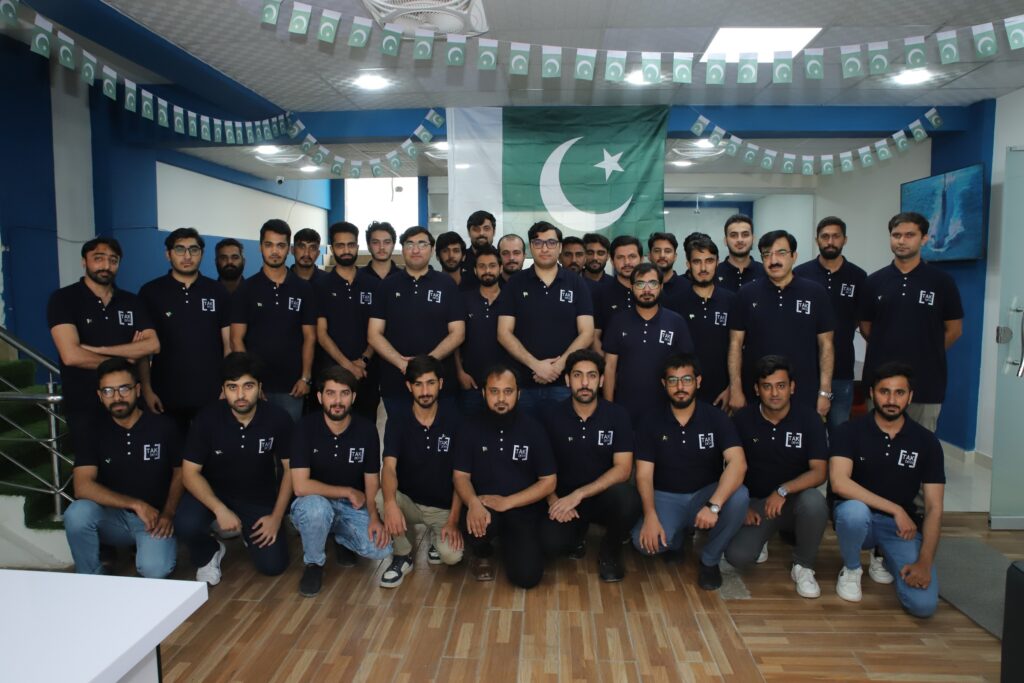
Most agencies treat a handoff as a formality at the end of a statement of work. The team at TAK Devs treats it as a deliverable in its own right, because it functionally is one: a system nobody documented and nobody owns is not actually finished, whatever the invoice says.
That shows up in how engagements close out. Handoffs include the full package from Section 7 by default, documentation, a credentials vault, infrastructure as code, monitoring, and a cost baseline, rather than treating those as optional extras someone has to ask for. It's also why security posture gets built in from day one rather than retrofitted: TAK Devs is ISO 9001 and ISO 27001 certified, and the team's HIPAA-aligned telehealth marketplace, UpliftCare, was built in roughly three months with exactly this kind of ownership clarity in mind from the start, not added after a security review flagged gaps.
Where TAK Devs Fits: From Cloud Audit to Ongoing Managed Operations
The work in this guide maps onto three stages, and you don't have to start at the expensive end. A cloud ownership audit comes first: a structured pass through every row in Section 3's table, so you know exactly where you stand before committing to anything bigger. From there, handoff engineering closes the specific gaps the audit finds, missing documentation, orphaned access, absent monitoring. Ongoing managed operations is the option for teams that want that coverage to continue rather than expire again the next time a contractor moves on.
Our full range of solutions covers all three stages, along with the AI, data, and security work that tends to sit next to a cloud handoff once a company is past the earliest stage: automated cost governance, security testing, and compliance work that plugs the gaps this guide walks through.
- Day 1: run the ownership audit. Use Section 3's table before you sign anything new.
- Week 1: lock down access. Rotate every credential the audit flagged and remove agency accounts that no longer need write access.
- Week 4: finish documentation and infrastructure as code. Close the gaps from Section 7's checklist while institutional knowledge is still fresh.
- Day 30: get ongoing coverage live. Whichever model from Section 4 you picked, it should be actively monitoring by this point, not still being onboarded.
- Day 90: run the first optimization review. Check cost against the baseline from Section 7 and confirm nothing from the red-flags list in Section 5 has quietly crept back in.
Who Runs Your Cloud After the Dev Agency Hands Off? Frequently Asked Questions
The questions founders and technical leads actually ask once the agency relationship is ending, answered directly.
Your company is responsible for whatever infrastructure runs under its cloud account, regardless of who configured it. Responsibility follows account ownership, not who wrote the original code. If the root account is still technically the agency's, you need to re-parent it to your organization immediately, because you carry the operational risk either way.
Yes, unless access was explicitly revoked. Unless someone actively removed the agency's IAM users, rotated the root credentials, and disabled any lingering service accounts, former access typically stays live by default. This is one of the most common findings in a post-handoff ownership audit.
It depends heavily on the model. A full-time in-house hire is the highest fixed cost. A managed cloud partner typically runs lower than a full salary while still providing senior coverage, because the cost is shared across the partner's other clients. Get a scoped quote against your actual infrastructure rather than assuming a number; the range is wide.
This is a hard blocker, not a formality, and it should be resolved before final payment, not after. Tie release of the final invoice to confirmed transfer of root or admin access on every account in the ownership audit. If the agency resists a reasonable, contractually owed handoff, that resistance is itself useful information.
Most companies below a certain scale don't need a full-time DevOps hire. A managed cloud partner can cover monitoring, patching, cost governance, and incident response for less than a full salary. The threshold to justify an in-house hire is usually infrastructure complex enough to occupy someone full-time, not just "we have a production environment."
A focused handoff, covering the ownership audit and the full handoff package (docs, credentials, infrastructure as code, monitoring, cost baseline), typically takes one to two weeks of dedicated effort. It stretches much longer only when documentation never existed in the first place and has to be reconstructed after the fact.
At minimum: an architecture overview, a deployment runbook, a dependency list with versions, a credentials vault with every secret rotated, an infrastructure-as-code repository, and a cost baseline. Ask for a short recorded walkthrough too; it catches gaps written docs alone tend to miss.
A retainer offer isn't a red flag by itself, plenty of legitimate agencies offer one, but it should never be a substitute for actual ownership transfer. You can accept an ongoing retainer and still insist on holding root access, current documentation, and rotated credentials. Ownership and ongoing support are separate questions, and a good agency will not conflate them.
Ready to Find Out Who's Actually Running Your Cloud?
If your agency relationship is ending, or already has, get a straight answer on what you own, what's still exposed, and what it takes to close the gap before it costs you.
Get a Cloud Ownership Audit