


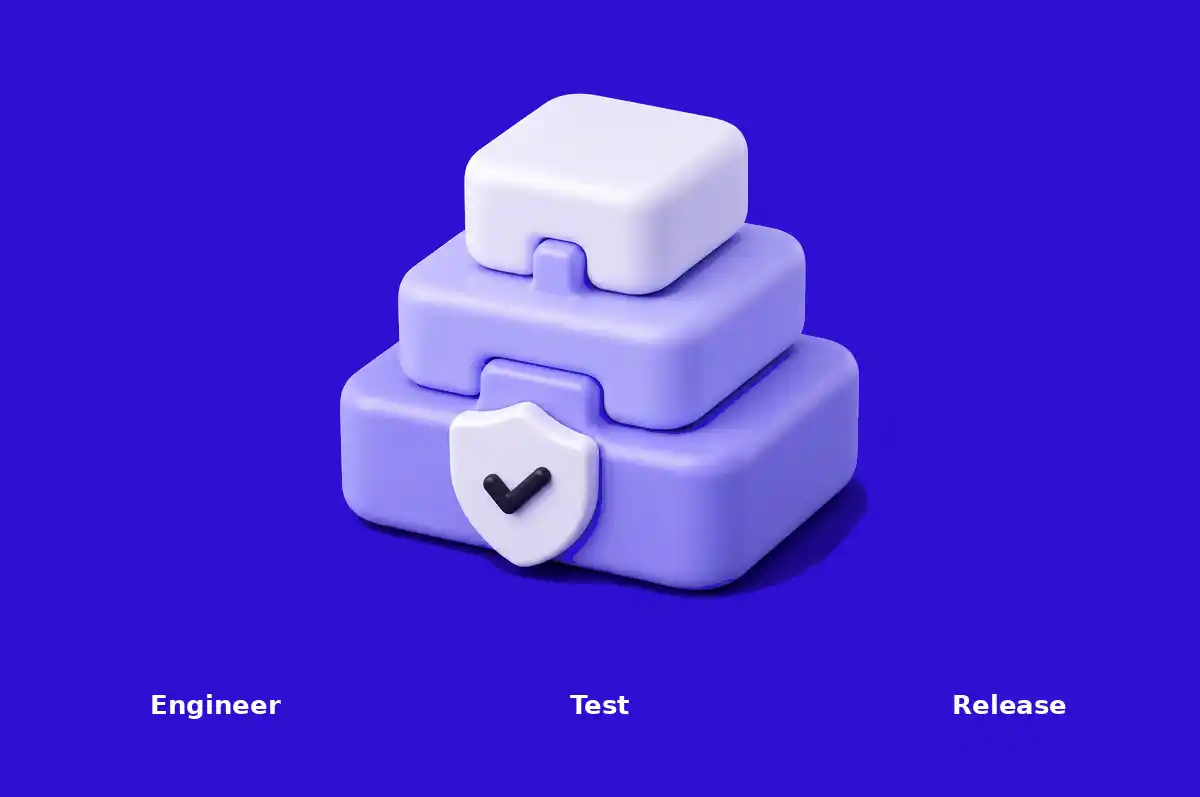
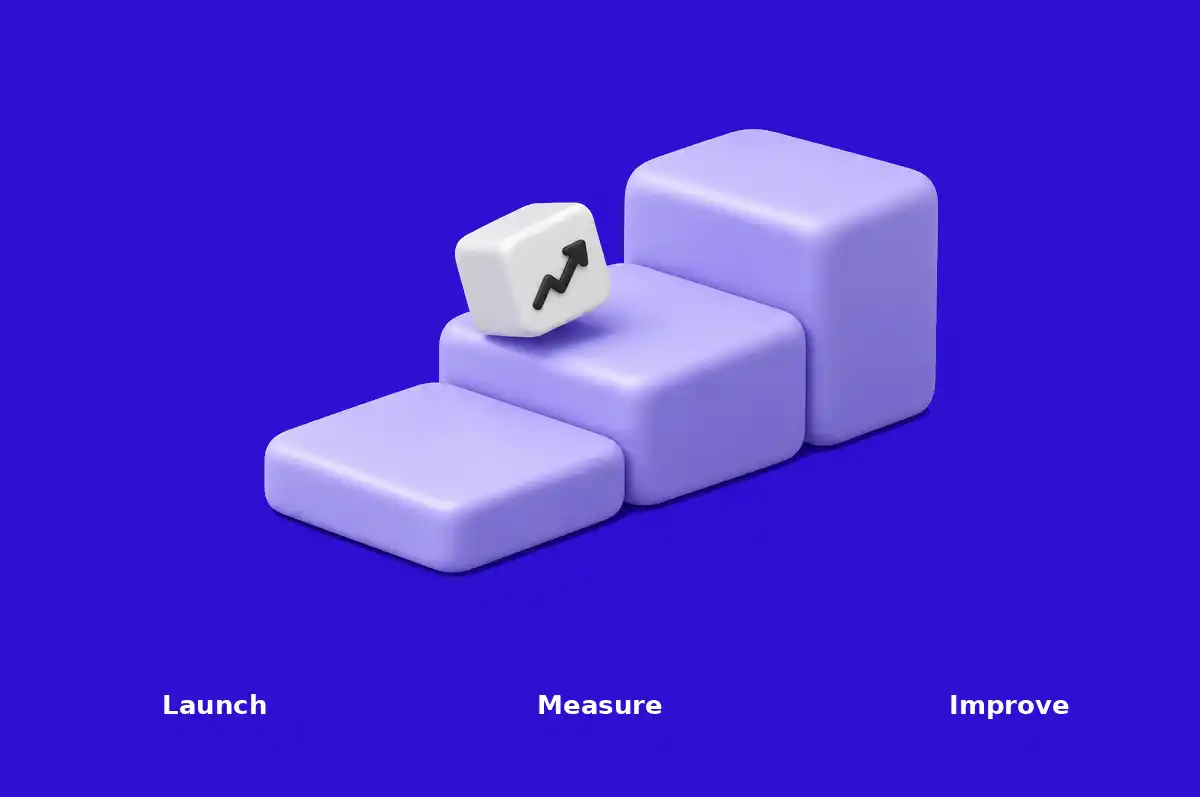



What An MVP Is
A working product with only the features that prove the idea.
A minimum viable product is the first real version of your software, built with just enough functionality to put in front of users, gather feedback, and prove demand before you spend on a full build.
Done right, MVP software development reduces risk and tells you what to build next based on real usage, not guesses. Done wrong, it becomes throwaway code you rebuild in six months. We optimize for the first outcome.
MVP Software Development Services
Whether you arrive with a one-line idea or a backlog of features nobody has scoped, here is what we cover.
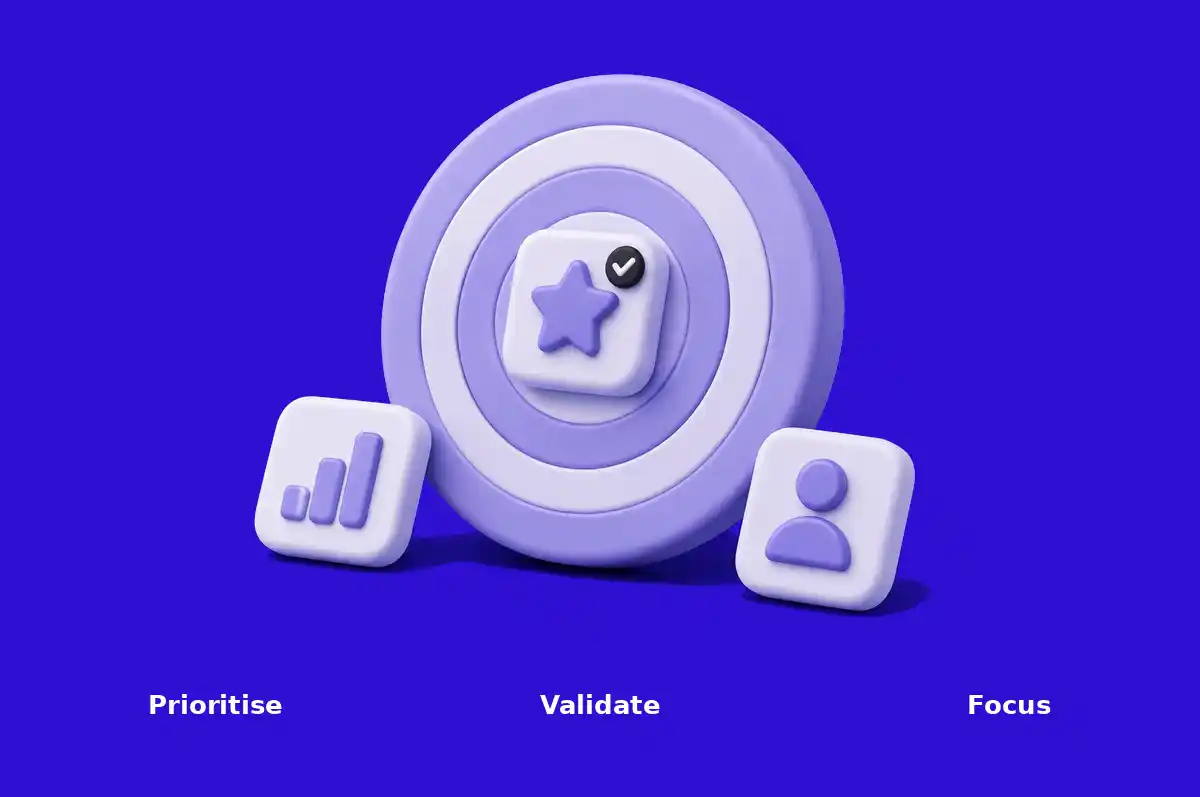
Scope The Right MVP
Cut the features that do not earn their place in v1.
Most MVPs fail because they try to do too much. We help you find the smallest product that proves your core assumption.
- Idea and market validation before a line of code is written
- Feature prioritization using MoSCoW and Kano frameworks
- A product roadmap that fits on one page, not one shelf
- Product-market fit signals defined upfront so you know what success looks like
- Scalable architecture planned now, so v2 is not a rebuild
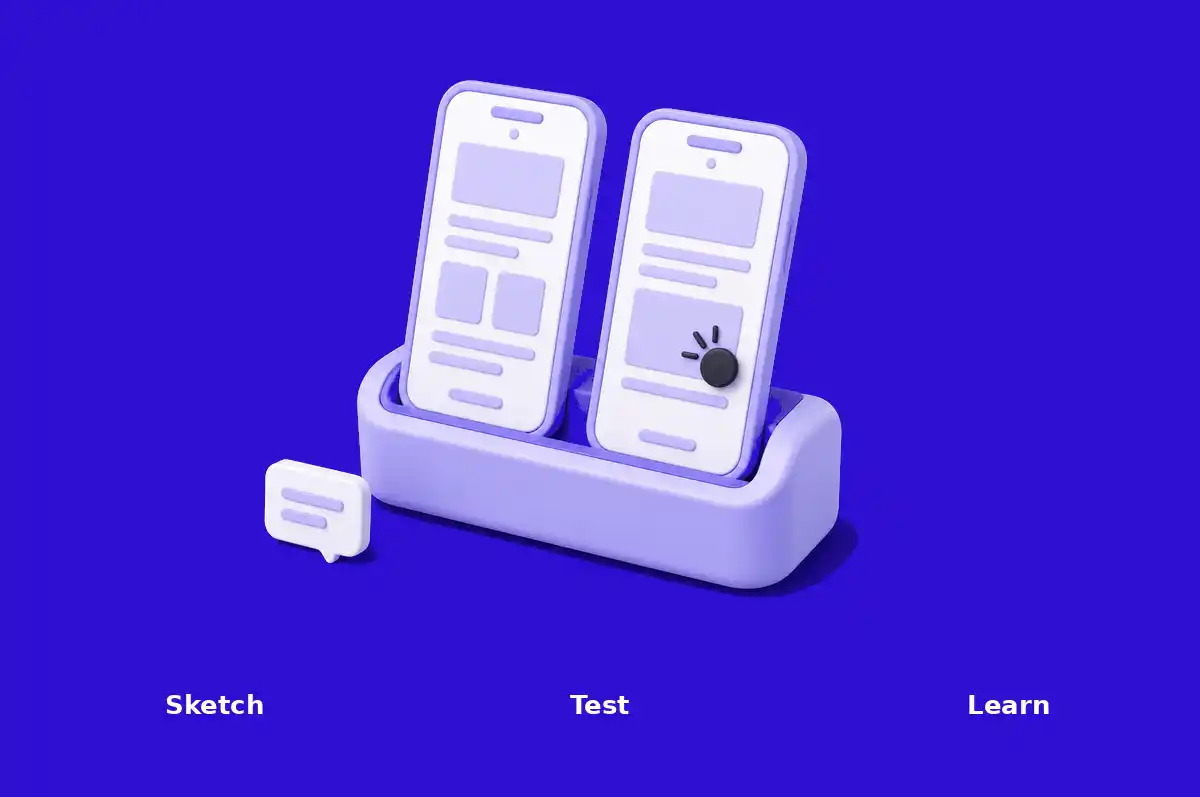
Prototypes Before Code
Test the experience with users before building the real thing.
Design decides whether your product feels obvious or confusing. We map the journey and build a clickable prototype you can actually test.
- User journey mapping for the one workflow that matters most
- Wireframes and a clickable prototype in 2 to 3 weeks
- Usability testing to catch friction before it is expensive to fix
- Clean, functional UI design that early adopters trust
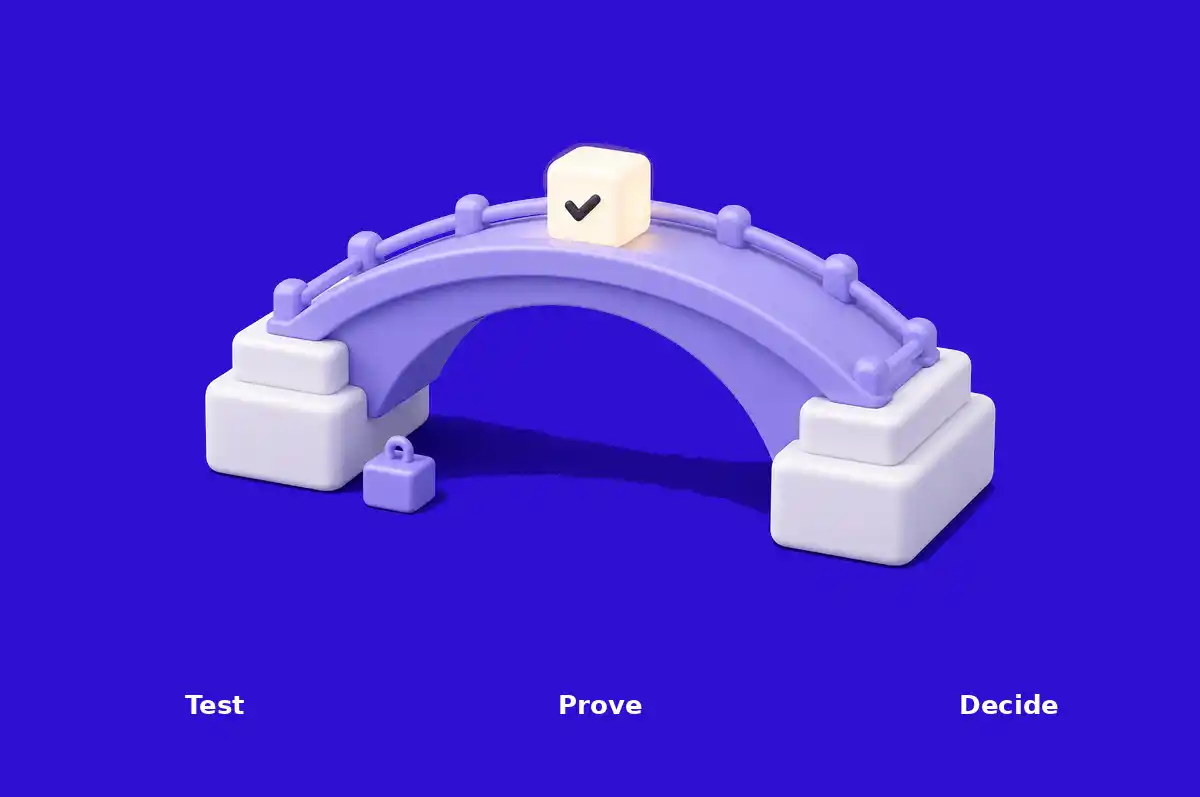
PoC When It Counts
Prove the risky technical part before you commit to a full build.
A proof of concept is not the same as a prototype or an MVP. Confusing them wastes money. We build a PoC only when a core technical question needs answering first.
- A PoC tests feasibility: can the hard part actually be built?
- A prototype tests the experience: does the workflow make sense to users?
- An MVP tests the market: will people adopt and pay for it?
- We tell you which one you actually need, not which one bills the most
Build That Survives Users
Production-grade software, not a fragile demo that breaks on contact.
This is the core build: the working product your users sign into. We write it to survive real traffic, not just a controlled demo.
- Agile sprints with a live demo every two weeks
- QA and testing built into every sprint, not bolted on at the end
- Future-ready architecture so adding features later does not mean starting over
- Secure authentication, data validation, and compliance handled from sprint one
- Deployment to production with CI/CD pipelines, not a manual upload at midnight
Growth After Launch
Turn a launched MVP into a product that keeps improving.
Launch is the start, not the finish. Once your MVP has real users, we help you read the data and ship the next version with intent.
- Analytics embedded to track retention, churn, and activation, not vanity metrics
- Roadmap decisions driven by real usage, not assumptions
- v2 and v3 feature rollouts as you find traction
- Infrastructure scaling, with 20 to 35% cloud cost reduction typically identified
- Ongoing maintenance and SLA-backed support
Trusted and recognized across the industry
How TAK Devs Works
Process diagrams look the same at every agency. What matters is what actually happens inside each phase. Here is how we work in practice:
Discovery Call
A focused conversation to understand your goals, challenges, and vision. We ask the right questions to uncover what you truly need — before a single line of code is written.
Scoping Workshop
We translate your goals into a clear, actionable plan. Features are prioritised, timelines are set, and everyone aligns on what success looks like eliminating guesswork from day one.
Sprint Delivery
We build in short, focused cycles, shipping real, working software every sprint. You see progress continuously, give feedback early, and stay in control of where the product is heading.
Launch & Handoff
Your product goes live with confidence. We handle deployment, documentation, and knowledge transfer, ensuring your team is fully equipped to own and operate what we built together.
Ongoing Support
Our relationship doesn't end at launch. We monitor, maintain, and improve your product over time, fixing issues fast and helping you evolve as your users and business grow.
Struggling to keep up with development demands?
See how we can streamline your workflow.
No commitment required | Takes 20 minutes !
Who We Build For
If one of these sounds uncomfortably familiar, we can help.
Founders.
Burning runway on a vendor who vanished after the deposit. We scope tight, ship in 12 weeks, and hand you a product you fully own.
CTOs and product leaders.
Watching a build slip quarter after quarter with no demo to show for it. Bi-weekly demos mean you see working software every two weeks, not a status report.
Software product companies.
Sitting on a new product idea that never escapes the backlog. We spin up a dedicated team to ship the new line without pulling your core team off their work.
Non-technical founders.
A sharp idea, real domain expertise, and no one to build it. We act as your build team and translate the idea into a product, no technical co-founder required.
Industries We Serve
Healthcare
HIPAA-compliant marketplaces, patient platforms, and clinical tools.
Fintech
Secure, audited products for payments, lending, and financial data.
Logistics & supply chain
Automation and visibility tools for freight, 3PL, and field operations.
Retail & eCommerce
Customer-facing platforms built to handle real traffic.
EdTech
Learning and adaptive platforms for growing user bases.
Professional services
Internal tools and SaaS that replace spreadsheets and manual work.
How Long It Takes
Real timeframes, so you can plan a launch instead of guessing.
Every project is different, but most MVP builds move through the same stages on a predictable clock.
| Stage | Typical timeframe |
|---|---|
| Discovery and scoping | 1 to 2 weeks. We pressure-test the idea and lock the feature set. |
| Clickable prototype | 2 to 3 weeks. A working design you can put in front of real users. |
| Proof of concept (if needed) | 2 to 4 weeks. Only when a core technical risk needs proving first. |
| MVP build to launch | 8 to 12 weeks. Bi-weekly sprints, live demos, production deployment. |
Why Teams Pick TAK DEVs
Fixed-Price Scoping
Honest scoping and fixed-price options on defined work. No surprise invoices, no 80-page proposals nobody reads.
Production-Ready By Default
We build for real users from day one, not for a demo that quietly falls apart the week after the pitch.
Compliance Day-One
For regulated products, compliance is designed in from sprint one. We delivered 100% HIPAA compliance on day-one for UpliftCare.
Boutique Capacity
We take a limited number of engagements each quarter so senior engineers stay on your build. No juniors hidden behind a partner logo.
Testimonials
I'm happy with TAK Devs Pvt Ltd's work quality. Our engagement with TAK Devs Pvt Ltd is a huge success. Our project is very complex and has many engineering metrics and variables, and the team delivers high-quality work.

TAK Devs Pvt Ltd delivered a robust system designed to handle 2 million daily users, achieving a seamless integration of PDF creation as part of the authentication process. The team consistently met deadlines and was highly responsive, flexible, transparent, understanding, and proactive.

Thanks to TAK Devs Pvt Ltd, the client can seamlessly track session duration, user engagement, and login metrics. They also can efficiently monitor appointment bookings, assess client-therapist match rates, and collect feedback. The service provider's knowledge and quality delivery are exemplary.

TAK Devs Pvt Ltd delivered a functional POC and offered detailed guidance throughout the development process. The team was helpful in explaining the project's complexities for the client to understand everything thoroughly. They communicated via virtual meetings, email, and messages.

Great communication, top understanding of Spec, autonomous development. Everything Perfect.

Real professionists, always ready to help our resident team. It's a pleasure to work with them.

Great work, implemented everything 100% as per our specifications, and very fast!

TAK Devs Pvt Ltd's efforts have been met with positive acclaim. The team is always available and communicative via virtual meetings and email. Their software development expertise and listening skills make them stand out.

Frequently Asked Questions
What is an MVP and how is it different from a full product?
An MVP is the first working version of your product, built with only the features needed to test the idea with real users.
- A full product tries to serve every use case from launch. An MVP focuses on the one core problem and the smallest set of features that proves people want it, so you learn before you spend on the rest.
What is the difference between a PoC, a prototype, and an MVP?
A PoC tests whether something can be built, a prototype tests the experience, and an MVP tests whether the market wants it.
- Use a PoC when a core technical risk needs proving first.
- Use a prototype when you need to validate the workflow and design with users.
- Use an MVP when you are ready to put a working product in front of real customers.
How long does it take to build an MVP?
Most MVPs go from brief to launch in 8 to 12 weeks, with scoping and a prototype in the first few weeks.
- Discovery and scoping take 1 to 2 weeks, a clickable prototype 2 to 3 weeks, and the build to launch 8 to 12 weeks. A proof of concept, when needed, adds 2 to 4 weeks.
How much does MVP software development cost?
Cost depends on the platform, feature complexity, integrations, and compliance needs, which is why our MVP software development services start with scoping before quoting.
- Published industry ranges put mobile MVPs in the tens of thousands and complex SaaS MVPs higher. Rather than guess, we give you a fixed-price scope after the discovery call so you know the number before committing.
What if we start and realize it is not the right fit?
We design engagements without long-term lock-in, so you are never trapped in a contract that stopped working.
- The discovery call exists to catch a bad fit early. If we are not the right team for your project, we will say so and point you toward who is.
I do not have a technical team. Can you still build my MVP?
Yes. Many of our clients are non-technical founders, and we act as the full build team end to end.
- We handle strategy, design, development, QA, and deployment, and we translate your domain expertise into product decisions. You do not need a technical co-founder to start.
Who owns the code and IP after launch?
You own all of it. Full code ownership and IP transfer are standard, with a clean handover at the end.
- We protect ownership with clear agreements and NDAs up front, and you can take the product in-house whenever you choose.
Do you sign NDAs and data protection agreements?
Yes. We sign NDAs before discussing your idea in detail and put data protection agreements in place for any sensitive data.
Can you build a HIPAA-compliant or regulated MVP?
Yes. We build compliance into the architecture from the first sprint rather than retrofitting it later.
- For UpliftCare we delivered a HIPAA-compliant healthcare marketplace with 100% compliance on day-one, built in 12 weeks.
What happens after the MVP launches?
We help you read real usage data, ship the next versions, scale the infrastructure, and support the product under an SLA.
- Analytics are embedded from launch so roadmap decisions come from retention and churn data, not assumptions.
Can your team take over an MVP another agency started?
Yes. We can audit an existing codebase, document what is there, and continue the build or stabilize it.
- We start with a short technical review so we understand what we are inheriting before committing to a timeline.
How do you keep the MVP from becoming throwaway code?
We plan scalable architecture during scoping so the MVP becomes the foundation of v2, not a rebuild.
- Cutting scope is about features, not engineering quality. The smaller feature set still ships on a clean, future-ready codebase.