







What Does Digital Transformation Consulting Include?
Digital transformation consulting is how a company finds what is slowing it down, then fixes it with software, cloud, data and AI. At TAK Devs, the same team that runs your maturity assessment and writes the roadmap also builds it, in two-week sprints, so the plan never gets handed to a vendor who was not in the room.
Know Your Starting Point
A maturity assessment that tells you the truth first
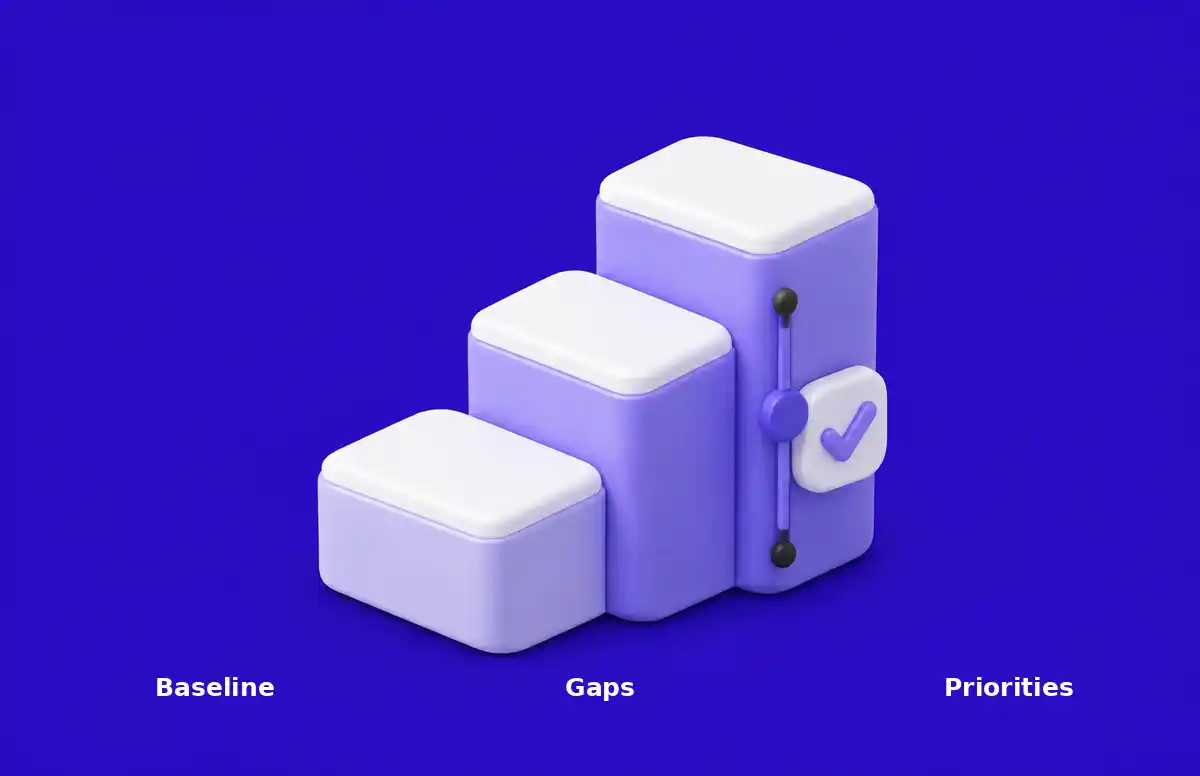
McKinsey puts the failure rate of large-scale transformations at about 70 percent. Most of those budgets get spent before anyone confirms what is actually broken. We run a digital maturity assessment across your systems, workflows, and data before recommending a single tool.
- Full audit of current systems, integrations, and manual workarounds
- Gap analysis scored against your specific growth stage, not a generic industry benchmark
- A prioritized list of fixes ranked by business impact and effort
- Clear go or no-go recommendation before any build work starts
- Delivered as a working document your leadership team can act on, not a slide deck
Roadmaps Built To Ship
Strategy that ships as a build plan, not a binder
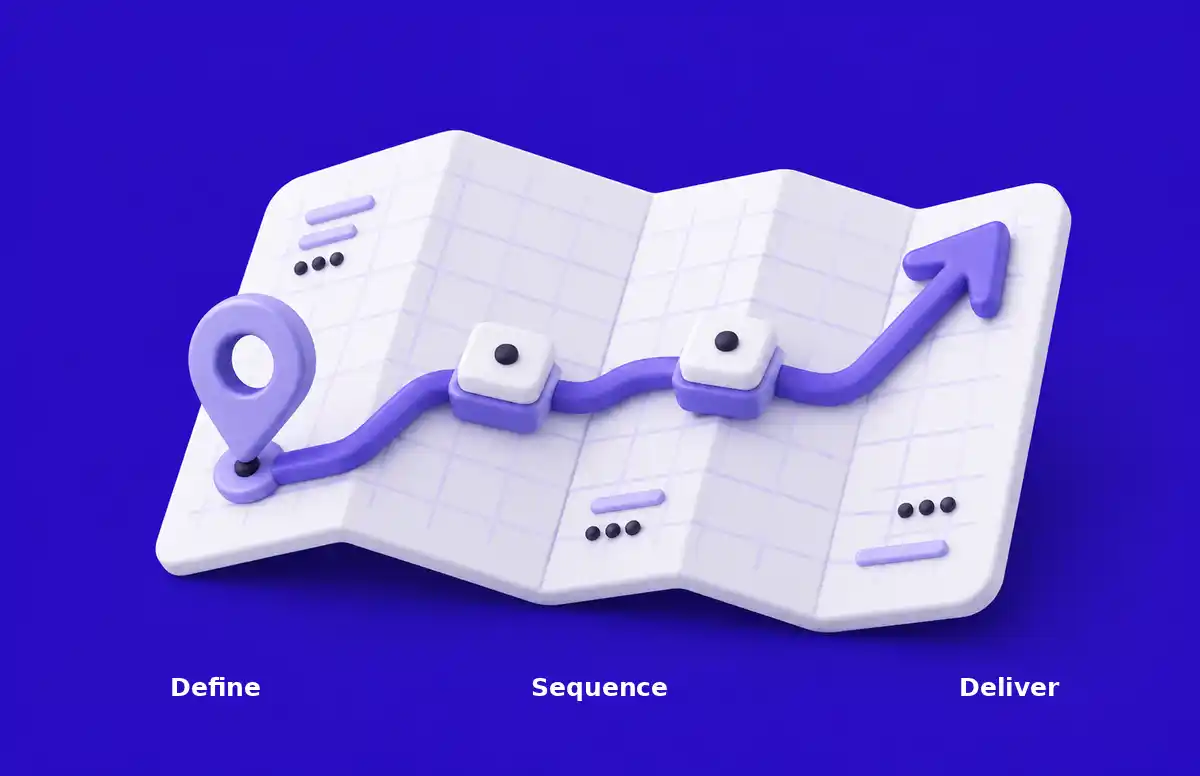
A digital transformation strategy is only useful if engineering can act on it. We write roadmaps in sprints and milestones, not abstractions.
- 12 to 24 month roadmap sequenced by dependency, not wishlist
- KPIs tied to revenue, retention, or cost, defined before the first sprint
- Technology selection grounded in your team’s actual skill set
- Budget bands attached to every phase, so finance is never surprised
- One page leadership can actually read, backed by the detail engineering needs
Legacy Systems, Modernized
IT transformation that keeps the business running mid-migration
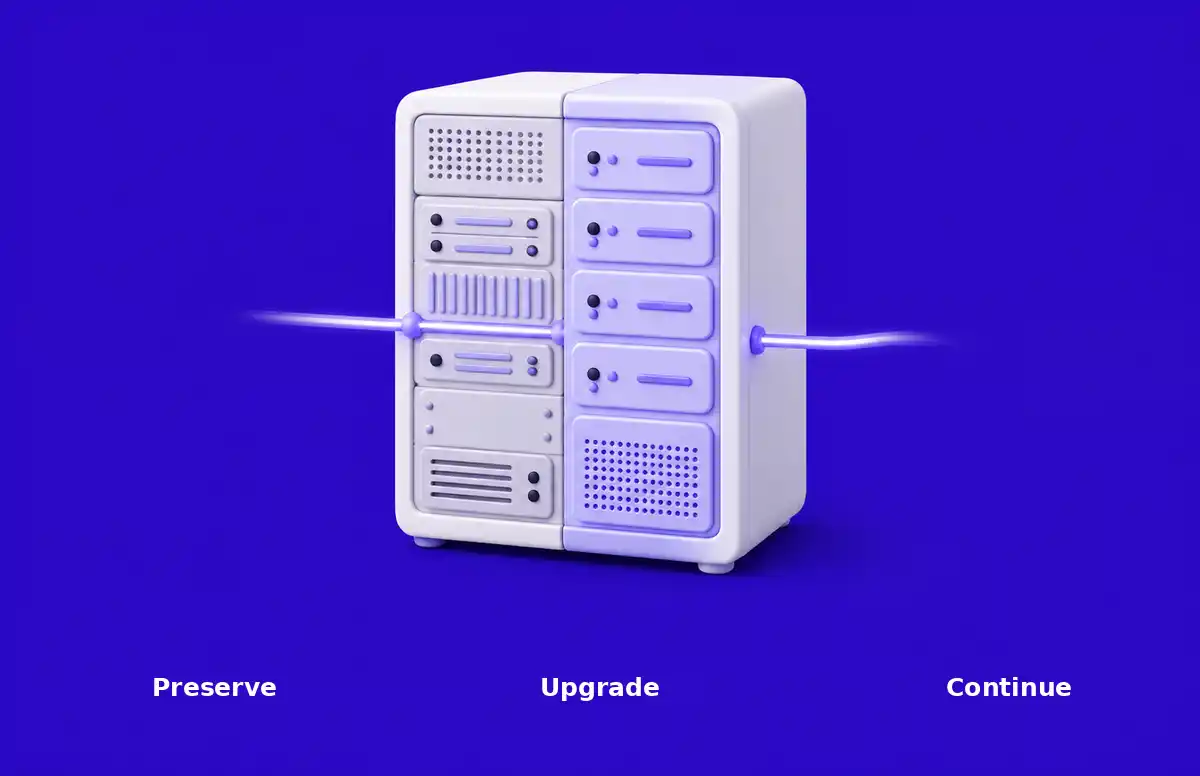
Ripping out core systems overnight is how transformations fail. We modernize legacy infrastructure in stages that never take the business offline.
- Legacy application audits with a clear rebuild, replace, or retire call per system
- Incremental migration paths instead of risky big-bang cutovers
- API layers built to connect old and new systems during transition
Cloud That Scales Right
Cloud and infrastructure work sized to your actual traffic
Over-provisioned cloud spend is one of the most common transformation casualties. We architect for the load you have, with a clear path for the load you will have.
- Cloud migration and architecture across AWS, Google Cloud, and Microsoft Azure
- 20-35% typical cloud cost reduction identified during optimization audits
- DevOps and CI/CD pipelines built for bi-weekly, not quarterly, releases
- Infrastructure designed to hold up under 2M+ daily users when that day comes
- Managed cloud services so your team is not on call for someone else’s outage
AI That Survives Production
Data and AI advisory grounded in production, not demos
Most AI pilots die in the notebook. We build the data engineering and MLOps layer that lets a model survive contact with real users.
- Data engineering and integration to unify scattered, siloed sources
- Generative AI and machine learning models built for a specific business workflow
- AI chatbots and agents wired into systems you already run, not a standalone demo
- AI MVP and proof-of-concept builds scoped to prove value fast
- MLOps infrastructure so models keep working after the data scientist moves on
Experiences Customers Keep
Digital product and UX work built around the real journey
A transformation customers never feel is a transformation that did not happen. We map the journeys your customers and staff actually take, then rebuild the screens and flows where they drop off or pick up the phone.
- Journey mapping across web, mobile and internal tools before any redesign
- UX audits that rank friction points by business impact and effort
- Web and mobile apps built on the same roadmap as the back-end work
- Usability testing with real users before features reach production
Trusted and recognized across the industry





How TAK Devs Works
Process diagrams look the same at every agency. What matters is what actually happens inside each phase. Here is how we work in practice, refined across 150+ delivered projects.
- 150+ projects delivered
- ISO 9001 quality certified
- ISO 27001 security certified
Discovery Call
We uncover what you actually need first.
Output: problem briefScoping Workshop
Goals become a costed, prioritised delivery plan.
Output: scope and roadmapSprint Delivery
Tested, working software shipped every sprint.
Output: working softwareLaunch & Handoff
Live deployment, full docs, clean knowledge transfer.
Output: live product and docsOngoing Support
We monitor, maintain, and scale after launch.
Output: monitored and maintainedNot sure which phase you are in? Start with a discovery call and we will tell you honestly.
Book a discovery callNot sure where your transformation is stuck?
Get a straight answer on what to fix first.
No commitment required | Takes 20 minutes
Who We Work With
Digital transformation tends to fail the same way for a few very specific kinds of buyers.
Founders
CTOs and VPs of Engineering
COOs and Operations Leaders
Product Leads
Industries We Serve
Digital transformation scoped to how your industry actually works, not a generic template.
Health Tech
HIPAA-aligned platforms that replace paper and phone workflows, the same architecture TAK Devs delivered for UpliftCare's telehealth marketplace.
Fintech
Modernizing products that handle sensitive financial data and audit trails, without taking customer-facing systems offline mid-migration.
Legal Tech
Turning dense case and document workflows into searchable, automated systems non-technical legal teams actually use.
SaaS
Cloud architecture, CI/CD and AI features that let a growing product ship every two weeks instead of every quarter, the kind of build behind RegioKI, an agentic AI SaaS for German SMEs.
Travel and Hospitality
Two-sided marketplaces and booking systems, the same category of work behind Holiday Horse, a German farmhouse accommodation and event marketplace.
Retail and E-commerce
Connecting storefront, inventory and fulfilment data so decisions run on one source of truth instead of nightly exports.
Differentiators that hold up when checked, not just claimed.
Research-Backed Scoping
Every roadmap starts from a maturity assessment of your real systems, the same discipline that took UpliftCare from no architecture to a live telehealth marketplace in twelve weeks.
Fixed-Price, No Surprises
Transparent scoping and fixed-price options, so a transformation engagement doesn’t quietly become an open-ended retainer.
Compliance-Ready by Default
HIPAA-aligned architecture for healthcare products, as delivered for UpliftCare, and GDPR-aware data handling for EU clients, built in from the first sprint instead of retrofitted after an audit.
ISO-Certified Process
ISO 9001 (quality) and ISO 27001 (security) certified delivery, audited against a published standard, not just claimed on a sales call.
Boutique Capacity
A limited number of new engagements accepted each quarter, so senior engineers stay on the project, not just the first call.
Recognized, Not Self-Proclaimed
Clutch-recognized as a Top Web Design and UX agency for financial services, with a 5★ rating from verified client reviews.
What Working With TAK Devs Actually Looks Like
In early 2025, UpliftCare came to us with a clear challenge and a tight window. They needed a complete, HIPAA-compliant telehealth marketplace connecting patients, verified therapists, and healthcare institutions. The deadline was three months, set by an investor presentation they could not move.
There was no technical architecture. No defined roadmap. Just a vision and a date.
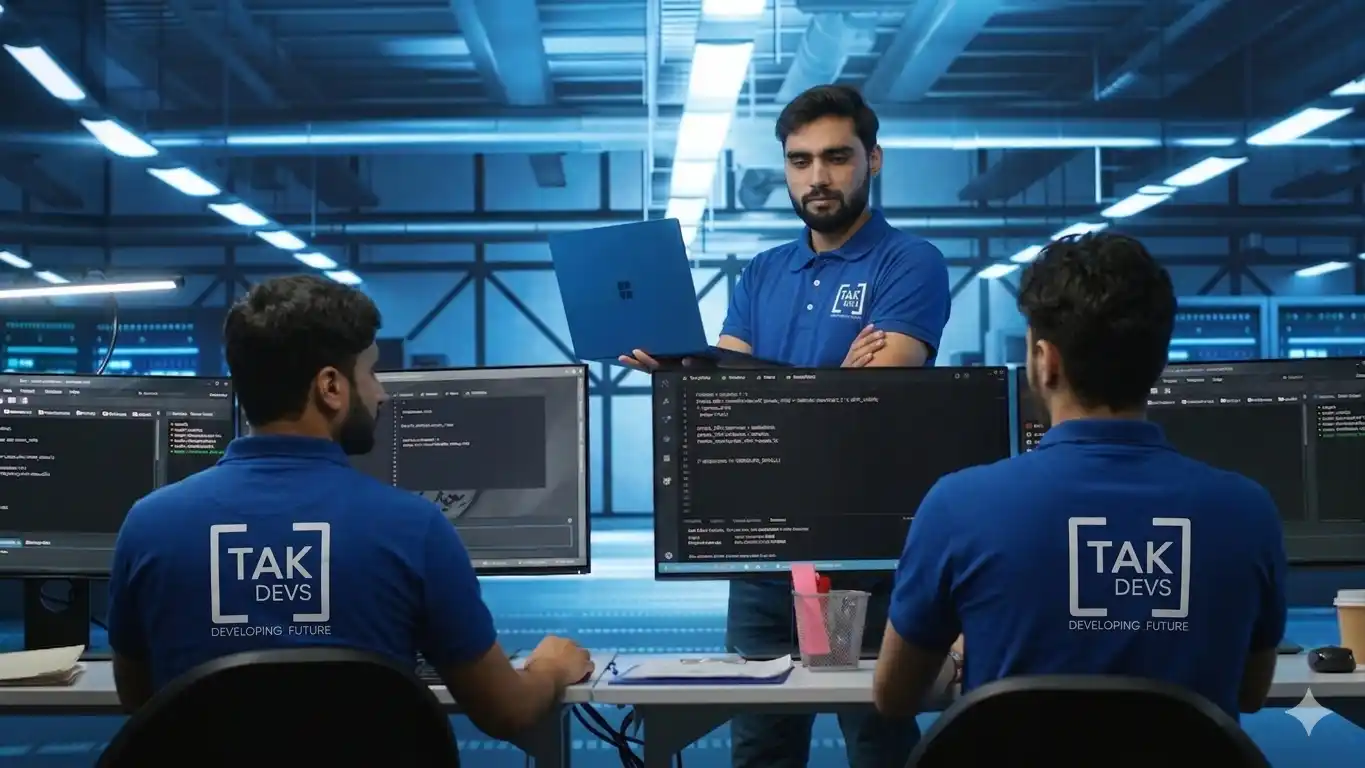
TAK Devs took on the full product lifecycle.
In six sprints and twelve weeks, we delivered:
Four connected portals covering Patient, Therapist, Admin, and Institutional workflows
Real-time video consultations via WebRTC, integrated Stripe payments, and smart scheduling
100% HIPAA-aligned architecture with full encryption across all data flows
Automated credential verification that reduced therapist onboarding time by 70%
CI/CD pipelines, automated testing, and AWS-based deployment ready for production from day one
What Clients Say About Working With TAK Devs
I'm happy with TAK Devs Pvt Ltd's work quality. Our engagement with TAK Devs Pvt Ltd is a huge success. Our project is very complex and has many engineering metrics and variables, and the team delivers high-quality work.

TAK Devs Pvt Ltd delivered a robust system designed to handle 2 million daily users, achieving a seamless integration of PDF creation as part of the authentication process. The team consistently met deadlines and was highly responsive, flexible, transparent, understanding, and proactive.

Thanks to TAK Devs Pvt Ltd, the client can seamlessly track session duration, user engagement, and login metrics. They also can efficiently monitor appointment bookings, assess client-therapist match rates, and collect feedback. The service provider's knowledge and quality delivery are exemplary.

TAK Devs Pvt Ltd delivered a functional POC and offered detailed guidance throughout the development process. The team was helpful in explaining the project's complexities for the client to understand everything thoroughly. They communicated via virtual meetings, email, and messages.

Great communication, top understanding of Spec, autonomous development. Everything Perfect.

Real professionists, always ready to help our resident team. It's a pleasure to work with them.

Great work, implemented everything 100% as per our specifications, and very fast!

TAK Devs Pvt Ltd's efforts have been met with positive acclaim. The team is always available and communicative via virtual meetings and email. Their software development expertise and listening skills make them stand out.



Frequently Asked Questions
What does a digital transformation consultant actually do?
A digital transformation consultant finds where your systems, data and workflows cost you time or revenue, then plans and sequences the fixes. At TAK Devs, the work does not stop at advice. The same team runs the maturity assessment, writes the 12 to 24 month roadmap, and builds it in sprints, so nothing gets lost in a handoff between strategy and delivery.
How is digital transformation consulting different from IT consulting?
IT consulting usually fixes or maintains the technology you already have. Digital transformation consulting asks whether that technology still fits how the business needs to run, then changes it: modernizing legacy systems, moving to the cloud, connecting data and adding AI where it does real work. The measure is a business outcome, such as cost, speed or retention, not a closed ticket.
How long does a digital transformation take?
The roadmaps TAK Devs writes run 12 to 24 months, sequenced by dependency, with tested software shipped every sprint along the way. You do not wait a year to see results. UpliftCare went from no technical architecture to a production telehealth marketplace in twelve weeks. Exact timelines are written into the proposal after the scoping workshop, not discovered mid-project.
How much does digital transformation consulting cost?
It depends on how many systems are involved, how much data has to move, and how regulated your industry is. TAK Devs offers fixed-price options for clearly defined phases and sprint-based pricing for ongoing work. Budget bands are attached to every phase of the roadmap, and exact numbers are confirmed in writing after the scoping workshop, so finance is never surprised.
Do we have to replace our legacy systems?
Usually not all of them. TAK Devs audits each core system and makes a clear rebuild, replace or retire call per system. Where a system still does its job, API layers connect it to the new stack. Migrations run in stages instead of a big-bang cutover, so the business stays online while the change happens.
Is digital transformation just moving to the cloud?
No. Cloud migration is often one step, but moving a slow process to AWS only gives you a slow process with a bigger bill. Transformation covers how work flows through your systems, how data moves between them, and where automation or AI removes manual effort. TAK Devs sizes cloud architecture to the traffic you have, with a clear path for the traffic you will have.
How do you make sure the transformation actually works?
Success gets defined before the first sprint: KPIs tied to revenue, retention or cost, measured against a baseline you agree on. TAK Devs ships tested, working software every sprint, so progress shows up in demos, not status reports. After launch, the same team monitors, maintains and scales what it built, under an ISO 9001 and ISO 27001 certified process.
What happens if we start and realize TAK Devs isn't the right fit?
The discovery call exists specifically to catch that before any contract is signed, and if there’s no fit, TAK Devs will say so and point you toward a better-suited option. For engagements already underway, there is no long-term lock-in, so a mismatch does not turn into a sunk-cost commitment.
- Honest scoping upfront is meant to make this a rare outcome, not a safety net that gets used often.
- Contracts are structured in phases, not as one long non-cancellable term.
- Feedback from a mismatch still gets documented, in case it helps the next engagement.