







What We Build
Emerging technology advisory only earns its cost if it changes what you fund next quarter. Here is what that looks like at TAK Devs, service by service.
Technology Scouting & Fit
Separate genuine opportunities from vendor hype and marketing noise.
Every vendor pitch sounds like the future. We evaluate AI, automation, cloud, and data tools against your actual architecture and constraints, not their deck.
- Structured scoring across technical fit, maturity, and total cost of ownership
- Vendor-neutral evaluation, with no reseller margin baked into the recommendation
- A shortlist of tools worth piloting, and a longer list of what to ignore this year
- Reference checks with teams already running the tool in production
Roadmaps Leadership Actually Uses
A prioritized plan your board can approve and fund.
A roadmap nobody reads is a slide deck, not a strategy. We build ours around business value and delivery effort, not technology for its own sake.
- Initiatives ranked by ROI and delivery risk, not novelty
- One page a CFO can approve, backed by a longer document engineering can execute
- Built around your actual customer needs and commercial pressure, not a generic template
- Reviewed quarterly so the roadmap does not fossilize the day it is signed off

AI Readiness, Audited Honestly
Know your real AI maturity before you commit budget.
Gartner predicted in 2024 that 30% of generative AI projects would be abandoned after proof of concept by the end of 2025, and an unchecked readiness gap is a common reason why. We benchmark your data, architecture, governance, and team capability before you spend on a pilot.
- Data quality and pipeline audit: is there enough usable data to train or fine-tune anything
- Governance and compliance gap analysis (HIPAA, GDPR, SOC 2, as relevant)
- Honest scoring, including a “not ready yet, and here is why” verdict when that is the truth
- A remediation plan for the specific gaps that are blocking you
Due Diligence Before Buying
Confirm technical and financial risk before you sign the contract.
Buying the wrong platform is expensive twice: once on the license, and again on the migration off it. We stress-test the technology, the vendor, and the total cost before you commit.
- Architecture review: does it actually integrate with what you already run
- Vendor financial and delivery riskassessment, not just a feature checklist
- Scalability testing against your real usage numbers, not the vendor’s marketed ones
- A go, no-go, or renegotiate recommendation delivered in writing
Architecture Built to Last
Design systems that adapt as the technology landscape keeps shifting.
Committing to a platform today should not mean rebuilding everything in two years. We advise on cloud-native, API-first architecture that absorbs the next wave of tools instead of resisting it.
- Cloud-native and API-first patterns that keep future migrations cheap
- Data foundation review so new AI tools have something usable to work from
- Modular integration design, so swapping one vendor does not mean rebuilding the stack
- Guidance mapped to AWS, Google Cloud, or Microsoft Azure, whichever you already run on
- Typical 20-35% cloud cost reductionidentified once the architecture review is done
Pilots That Prove Value
Test assumptions cheaply before scaling anything expensive.
A 2025 MIT NANDA study found that 95% of generative AI pilots at companies failed to deliver a measurable return, often because the pilot was never designed to prove anything. We design pilots with a hypothesis, success metric, and kill criteria before day one.
- A written hypothesis and success metric, agreed before the pilot starts
- Kill criteria set in advance, so a failing pilot gets closed, not quietly extended
- Fixed timeframe and budget, no open-ended “let’s see how it goes”
- A go or no-go decision backed by data, not by who championed it internally
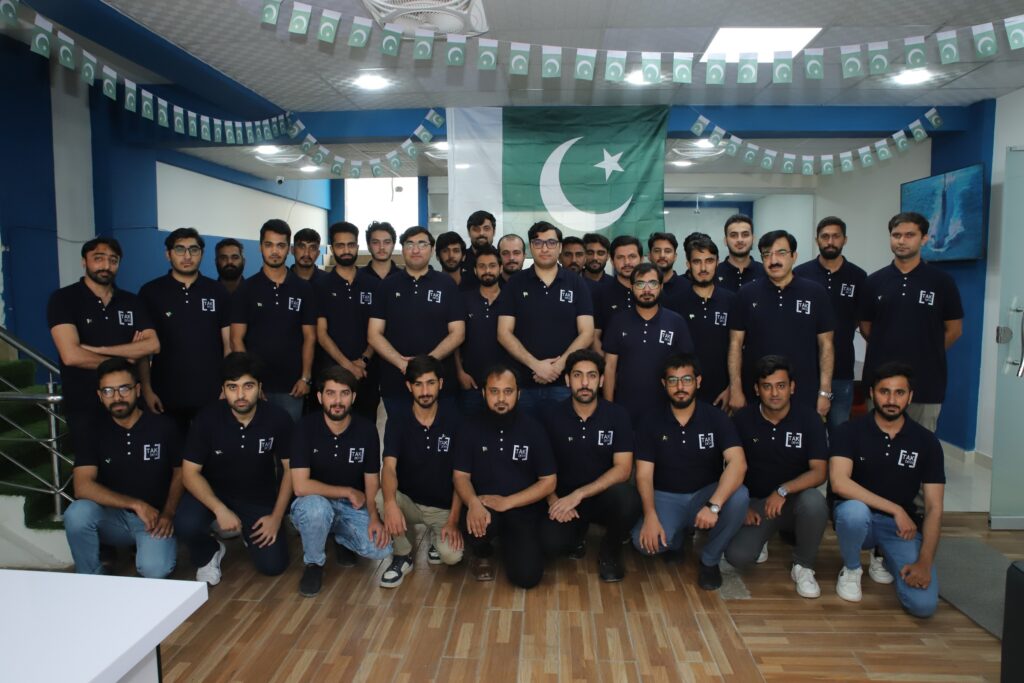
Trusted and recognized across the industry





How TAK Devs Works
Process diagrams look the same at every agency. What matters is what actually happens inside each phase. Here is how we work in practice, refined across 150+ delivered projects.
- 150+ projects delivered
- ISO 9001 quality certified
- ISO 27001 security certified
Discovery Call
We uncover what you actually need first.
Output: problem briefScoping Workshop
Goals become a costed, prioritised delivery plan.
Output: scope and roadmapSprint Delivery
Tested, working software shipped every sprint.
Output: working softwareLaunch & Handoff
Live deployment, full docs, clean knowledge transfer.
Output: live product and docsOngoing Support
We monitor, maintain, and scale after launch.
Output: monitored and maintainedNot sure which phase you are in? Start with a discovery call and we will tell you honestly.
Book a discovery callStruggling to keep up with development demands?
See how we can streamline your workflow.
No commitment required | Takes 20 minutes !

Who We Work With
UI/UX design strategy work tends to fail the same way for a few very specific kinds of buyers.
Founders
CTOs and VPs of Engineering
Product Managers
Design and Product Leads
Industries We Serve
UI/UX design strategy scoped to how your industry actually works, not a generic template.
Health Tech
HIPAA-aligned UX for patient and provider-facing products, the same approach delivered for UpliftCare.
Fintech
UI/UX design strategy for products handling sensitive financial data and audit requirements.
Legal Tech
Simplifying dense case and document workflows into interfaces non-technical legal teams can actually use.
SaaS
Design systems and strategy that keep a fast-growing product consistent as new features ship.
Travel and Hospitality
Marketplace UX for two-sided platforms, the same category of work behind Holiday Horse, a German farmhouse accommodation and event marketplace.
Retail and E-commerce
Conversion-focused UI/UX design strategy across web and mobile storefronts.
Differentiators that hold up when checked, not just claimed.
Research-Backed Scoping
Design decisions get validated with real users before build, the same approach that reduced UpliftCare’s onboarding time by 70%.
Fixed-Price, No Surprises
Transparent scoping and fixed-price options, so a design strategy engagement doesn’t quietly become an open-ended retainer.
Compliance-Ready by Default
100% HIPAA compliance delivered day-one for regulated healthcare and fintech products, not retrofitted after an audit.
ISO-Certified Process
ISO 9001 (quality) and ISO 27001 (security) certified delivery, audited against a standard, not just claimed in a pitch deck.
Boutique Capacity
A limited number of new engagements accepted each quarter, so senior designers stay on the project, not just the pitch.
Recognized, Not Self-Proclaimed
Clutch-recognized as a Top Web Design and UX agency for financial services, with a 5★ rating from verified client reviews.
What Working With TAK Devs Actually Looks Like
In early 2025, UpliftCare came to us with a clear challenge and a tight window. They needed a complete, HIPAA-compliant telehealth marketplace connecting patients, verified therapists, and healthcare institutions. The deadline was three months, set by an investor presentation they could not move.
There was no technical architecture. No defined roadmap. Just a vision and a date.

TAK Devs took on the full product lifecycle.
In six sprints and twelve weeks, we delivered:
Four connected portals covering Patient, Therapist, Admin, and Institutional workflows
Real-time video consultations via WebRTC, integrated Stripe payments, and smart scheduling
100% HIPAA-aligned architecture with full encryption across all data flows
Automated credential verification that reduced therapist onboarding time by 70%
CI/CD pipelines, automated testing, and AWS-based deployment ready for production from day one
Testimonials
I'm happy with TAK Devs Pvt Ltd's work quality. Our engagement with TAK Devs Pvt Ltd is a huge success. Our project is very complex and has many engineering metrics and variables, and the team delivers high-quality work.

TAK Devs Pvt Ltd delivered a robust system designed to handle 2 million daily users, achieving a seamless integration of PDF creation as part of the authentication process. The team consistently met deadlines and was highly responsive, flexible, transparent, understanding, and proactive.

Thanks to TAK Devs Pvt Ltd, the client can seamlessly track session duration, user engagement, and login metrics. They also can efficiently monitor appointment bookings, assess client-therapist match rates, and collect feedback. The service provider's knowledge and quality delivery are exemplary.

TAK Devs Pvt Ltd delivered a functional POC and offered detailed guidance throughout the development process. The team was helpful in explaining the project's complexities for the client to understand everything thoroughly. They communicated via virtual meetings, email, and messages.

Great communication, top understanding of Spec, autonomous development. Everything Perfect.

Real professionists, always ready to help our resident team. It's a pleasure to work with them.

Great work, implemented everything 100% as per our specifications, and very fast!

TAK Devs Pvt Ltd's efforts have been met with positive acclaim. The team is always available and communicative via virtual meetings and email. Their software development expertise and listening skills make them stand out.



Frequently Asked Questions
What is a UI/UX design strategy, and why does my product need one?
A UI/UX design strategy is a documented plan that aligns your product’s design decisions with business goals, user needs, and validated research before any screen gets built. Without one, teams tend to redesign by opinion, which is why so many redesigns launch and change nothing measurable.
- Built during the scoping workshop, before any wireframe work starts.
- Ties every later design decision back to a business goal someone actually cares about.
- Documented, not just discussed, so the plan survives staff turnover.
What's the difference between UX design and UI design?
UX design is how a product works (research, flows, structure), while UI design is how it looks (visual layout, typography, interactive elements). The two disciplines are inseparable in practice, and a design strategy that only plans for one of them usually breaks at the handoff to engineering.
- UX decisions (information architecture, user flows) shape which UI options even make sense.
- UI decisions (visual hierarchy, color, typography) determine whether a well-structured product actually feels usable.
- TAK Devs scopes both together so neither discipline is guessing at the other’s constraints.
How long does a UI/UX design strategy engagement take?
Most TAK Devs UI/UX design strategy engagements run about 12 weeks from discovery to launch, matching our average delivery timeline across projects. Multi-product strategies with strong existing research can move faster, while heavily regulated products with detailed compliance requirements can take somewhat longer than average.
- The scoping workshop in week one sets a specific timeline before any contract is finalized.
- Bi-weekly sprint demos mean you see progress well before week 12, not at the end.
- Timelines are stated in the proposal, not discovered mid-project.
We already have a live product. Can you improve our UX/UI design strategy without a full rebuild?
Yes. Most engagements start with an audit of the existing product rather than a rebuild from scratch. TAK Devs runs a UX/UI audit against usability heuristics and your own analytics data, then delivers a prioritized list of fixes ranked by impact and effort.
- A full redesign only gets recommended when the underlying structure, not just the surface design, is the actual problem.
- Existing brand and design assets get reused wherever they still work.
- Fixes get sequenced so the highest-impact changes ship first.
Do you validate designs with real users, or is this internal design opinion?
Every UI/UX design strategy engagement includes usability testing with real users before development begins, not just internal review. Jakob Nielsen of the Nielsen Norman Group found that testing with as few as five users typically uncovers about 85% of a product’s usability problems.
- Structured testing rounds run on wireframes and prototypes, not just the finished product.
- Design decisions get documented against what was actually observed in testing.
- A direction that fails testing gets revised before it reaches your engineering backlog.
Our team has no existing brand guidelines or design system. Is that a problem?
No, a missing design system is one of the most common starting points for a new engagement, not a blocker. TAK Devs builds foundational design tokens (color, typography, spacing, components) as part of the design systems service, documented so future features stay visually consistent without redesigning from scratch.
- Existing partial guidelines get audited and extended rather than replaced outright when they still work.
- Tokens are built once and reused across every future screen and feature.
- Documentation is written for whoever joins the design or engineering team next.
How do you measure whether a UI/UX design strategy actually worked?
Success gets defined during the scoping workshop against specific metrics agreed before design work starts, such as onboarding completion rate, task completion time, or conversion rate. TAK Devs tracks these post-launch against the pre-launch baseline instead of relying on a general sense of improvement.
- The same measurement approach reduced UpliftCare’s onboarding time by 70% within 12 weeks.
- Metrics are reported against the baseline, not against a vague sense of improvement.
- A strategy without a measurable success metric is a set of opinions, not a strategy.
Will your deliverables work with our existing development team and tech stack?
Yes. Design systems and handoff specs are built for whatever stack your engineering team already uses, not tied to one specific framework or vendor. TAK Devs documents components, tokens, and interaction specs in formats developers can implement directly, without a back-and-forth clarification thread.
- Production-ready front-end code is also available when a fuller engineering engagement is in scope.
- Design decisions get scoped against real technical constraints during the scoping workshop, not after the fact.
- Handoff includes documentation, not just a shared Figma link.
What does pricing look like for a UI/UX design strategy engagement?
Pricing depends on scope, but TAK Devs offers fixed-price options for clearly defined engagements alongside sprint-based pricing for ongoing work. Exact numbers get confirmed after the scoping workshop, once research, deliverables, and timeline are defined in writing, so there are no surprises later.
- No surprise invoices mid-engagement.
- Transparent scoping is a standing commitment, not a sales tactic.
- Fixed-price and sprint-based options can be discussed on the discovery call.
What happens if we start and realize TAK Devs isn't the right fit?
The discovery call exists specifically to catch that before any contract is signed, and if there’s no fit, TAK Devs will say so and point you toward a better-suited option. For engagements already underway, there is no long-term lock-in, so a mismatch does not turn into a sunk-cost commitment.
- Honest scoping upfront is meant to make this a rare outcome, not a safety net that gets used often.
- Contracts are structured in phases, not as one long non-cancellable term.
- Feedback from a mismatch still gets documented, in case it helps the next engagement.