What Is Adaptive Software Development? What This Guide Covers
Most software plans are obsolete within a month of being signed off. Markets shift, users want something different than what they asked for, and the requirements document becomes a historical artifact nobody consults. Adaptive Software Development was built for exactly that reality: it treats change as the starting assumption, not a scope-creep emergency.
What Is Adaptive Software Development?
Ask ten engineering leaders what is adaptive software development and most will describe Agile in general terms. That is only half the story.
Adaptive Software Development (ASD) is an agile software development methodology that replaces a single fixed plan with a continuous, timeboxed cycle of speculating, collaborating, and learning, so teams can keep building even while requirements are still moving. It was created specifically for complex projects where nobody involved, including the client, fully knows what the finished product looks like on day one.
ASD predates the word "Agile" itself. It grew directly out of Rapid Application Development (RAD) in the early 1990s, at a time when most software teams were still working from fixed, sequential specifications. Where a Waterfall plan tries to eliminate uncertainty before work starts, ASD assumes uncertainty is permanent and builds a process that can absorb it every few weeks instead of every few years.
In practice, that means an ASD team never asks "did we follow the plan?" as the measure of success. They ask "did we learn enough this cycle to make the next one better?" That single reframe is what separates adaptive software development from methodologies that only pay lip service to flexibility.
Where Adaptive Software Development Came From
ASD is not a rebrand of Agile. Agile is, in a real sense, a descendant of ASD.
Jim Highsmith and Sam Bayer developed Adaptive Software Development in the early 1990s as an evolution of Rapid Application Development, aimed at the complex, large-scale systems that RAD's original techniques struggled to handle. Highsmith formalized the approach in his 1999 book, Adaptive Software Development: A Collaborative Approach to Managing Complex Systems, which won the Jolt Award for technical books in 2000. Two years later, in 2001, Highsmith was one of the 17 original signatories of the Agile Manifesto, the founding document of the Agile movement (Wikipedia).
Highsmith worked as an IT manager, consultant, and software developer for more than two decades, including time at NASA and as an executive consultant at ThoughtWorks, before ASD became one of the reference points the entire Agile movement built on. The book's central adage still holds up as a description of the ASD mindset:
— Jim Highsmith, Adaptive Software Development (1999)
That is the philosophy in one sentence. ASD gives teams a repeatable structure, but the structure exists to serve the outcome, not the other way around.
The Core Principles That Define ASD
Strip away the branding and ASD comes down to eight working habits that reinforce each other.
None of these principles do much on their own. Together, they are what separates a team that is genuinely adaptive from a team that just skipped the documentation step of Waterfall and called it Agile.
- Mission-driven, not spec-driven. Teams align around a high-level goal and outcome, not a locked feature list, so the "what" can change without losing the "why."
- Iterative by design. Work happens in short, repeatable cycles rather than one long sequential build, so mistakes surface in weeks, not quarters.
- Timeboxed cycles. Every cycle has a hard time limit, which forces prioritization instead of letting scope quietly expand to fill the calendar.
- Feature-based delivery. Software ships in working, usable increments, so value shows up continuously instead of arriving all at once at the end.
- Change-tolerant by default. A changed requirement is treated as new information, not a failure of the original plan.
- Collaborative, decentralized decisions. Cross-functional teams make day-to-day calls themselves instead of routing everything through top-down sign-off.
- Risk-aware planning. Risks and assumptions are identified up front and revisited every cycle, rather than discovered the hard way near launch.
- Quality built in, not bolted on. Testing runs throughout the cycle instead of being a separate phase squeezed in before release.
Inside the ASD Lifecycle: Speculate, Collaborate, Learn
The adaptive software development lifecycle runs on three repeating phases: Speculate (set direction without over-planning), Collaborate (build and test together in tight loops), and Learn (formally capture what the cycle taught you before starting the next one). Each phase is timeboxed, and the cycle repeats for the life of the project.
"Speculate" is the deliberate word choice here, not "plan." Highsmith picked it precisely because a plan implies certainty ASD never claims to have.
During Speculate, stakeholders and the team define a mission, high-level goals, and an initial backlog, without pretending to know every detail. Risk identification happens here too, along with a loose release roadmap that is expected to change. During Collaborate, cross-functional teams build, test, and integrate in real time, favoring shared ownership over handoffs between silos. During Learn, the team runs focus groups, technical reviews, and postmortems to capture what actually happened, then feeds that directly into the next Speculate phase.
| Phase | Primary Focus | Key Activities | Typical Output |
|---|---|---|---|
| Speculate | Direction, not detail | Mission statement, high-level goals, backlog, risk list | A loose release roadmap |
| Collaborate | Building together | Cross-functional builds, rapid prototyping, shared ownership | Working software increments |
| Learn | Capturing reality | Focus groups, technical reviews, project postmortems | Input for the next Speculate phase |
ASD vs Waterfall, Scrum, and Kanban: How It Compares
Adaptive Software Development differs from Waterfall, Scrum, and Kanban mainly in how much of the plan it treats as fixed. Waterfall fixes the whole plan up front. Scrum fixes the sprint. Kanban fixes work-in-progress limits on a continuous flow. ASD fixes almost nothing except the mission and the timebox, which makes it the most adaptable of the four, and also the most demanding to run well.
This is not a purely academic distinction. McKinsey's research on agile organizations found that companies structured around networks of empowered teams and rapid decision cycles, the same DNA ASD is built from, consistently outperform rigid, hierarchical structures on customer centricity, speed, and cost.
| Aspect | ASD | Waterfall | Scrum | Kanban |
|---|---|---|---|---|
| Planning style | Adaptive, mission-led | Fixed, detailed up front | Fixed sprint backlog | Continuous, flow-based |
| Customer involvement | High and continuous | Mainly at kickoff | High, at sprint reviews | High, continuous feedback |
| Team collaboration | Very high, decentralized | Limited, role-based | High, ceremony-driven | High, pull-based |
| Risk handling | Continuous and proactive | Front-loaded, in planning | Per sprint | Continuous |
| Best suited for | Complex, uncertain projects | Stable, well-defined scope | Projects needing rapid, structured delivery | Continuous delivery and support work |
The Business Benefits of Adaptive Software Development
Done well, ASD is not just a developer preference. It shows up in numbers business leaders actually track.
- Faster time to market. Shipping in small, functional increments means new features reach customers in weeks instead of waiting for one big release.
- Genuinely customer-centric development. Continuous feedback loops mean the product converges on what customers actually want, not what a six-month-old spec assumed they wanted.
- Lower project risk. Problems surface inside a cycle instead of at final integration, when they are far more expensive to fix.
- Compounding improvement. Every Learn phase feeds real data back into the next Speculate phase, so the process itself gets sharper as the project goes on.
- More motivated teams. Decentralized decision-making gives engineers real ownership, which correlates with retention and quality far more than most incentive programs.
The data backs this up at the organizational level. PMI's Pulse of the Profession research found that "champion" organizations, the ones with mature, adaptable project practices, complete 92% of projects successfully, compared with just 32% for underperforming organizations, while the share of every project dollar wasted to poor performance has fallen from 13.5% to 9.9% as adaptive, iterative practices have spread.
The Real Challenges and Risks of ASD
ASD's flexibility is also where it can go wrong. The same looseness that makes it powerful makes it unforgiving of an inexperienced team.
None of these are reasons to avoid ASD outright. They are reasons to go in with eyes open, and to have a partner who has actually run this model before.
- Requires an experienced team. ASD depends on people who can make good decisions without a fully detailed spec, which is a real skill gap for teams used to being told exactly what to build.
- Resistance to change. Stakeholders used to fixed plans often read "evolving scope" as a red flag rather than a feature, and need to be brought along deliberately.
- Cross-functional friction. Breaking down silos between design, engineering, and QA takes real effort, especially in organizations with decades of handoff-based habits.
- Higher near-term cost. Continuous testing and stakeholder collaboration cost more up front than a single Waterfall test phase, even though it usually saves money later.
- Documentation drift. When the plan changes every cycle, documentation has to be treated as a living artifact, or it quietly goes stale.
These are not unique to ASD. McKinsey's research found that 82% of traditional organizations had gone through a structural redesign in the prior three years, yet only 23% considered that redesign successful. Adopting a more adaptive model is genuinely hard organizational change, with or without the ASD label attached.
Best Practices for Implementing ASD Without the Growing Pains
The teams that adopt ASD successfully tend to do the same handful of things well, regardless of industry.
- Secure real stakeholder buy-in early. Switching models needs visible support from the people who sign off on budget and scope, not just the engineering team.
- Break down silos deliberately. Shared tools, shared standups, and shared accountability do more to fix cross-team friction than any policy memo.
- Build a genuine fail-fast culture. A team that hides mistakes cannot Learn. A team that surfaces them quickly turns every misstep into cheaper information.
- Balance flexibility with a real roadmap. "Adaptive" does not mean "unplanned." Keep a high-level vision fixed while letting the details evolve inside it.
- Control cost with better tooling, not less testing. AI-assisted test generation and automated QA pipelines are how experienced teams keep continuous testing affordable at scale.
Is Adaptive Software Development Right for Your Project?
Adaptive Software Development fits projects with high uncertainty, evolving requirements, and an engaged customer who can participate continuously. It fits less well when scope, budget, and compliance requirements are genuinely fixed and unlikely to move, where a more structured model earns back the flexibility it gives up.
In regulated fields such as health tech or fintech, ASD can still apply, but only with the audit trails, security reviews, and compliance checkpoints those industries require built directly into every cycle. In practice, most teams should treat this as a spectrum rather than a binary switch, and be honest about where their specific project actually sits.
| Signal | Lean Toward ASD | Lean Toward Waterfall or Hybrid |
|---|---|---|
| Requirements | Expected to evolve | Fixed and well understood |
| Customer availability | Engaged, available continuously | Limited, sign-off only at milestones |
| Compliance load | Moderate, can be built into cycles | Very strict, audit-heavy |
| Team experience | Senior, comfortable with ambiguity | Needs more explicit direction |
Adaptive Software Development in the Age of AI: What Changes for 2026
In 2026, AI is compressing the Speculate-Collaborate-Learn cycle rather than replacing it. AI-assisted code generation speeds up Collaborate, and AI-driven test generation and analysis speed up Learn, which means teams can run through a full ASD cycle more often per quarter than the framework's original authors ever could in the 1990s.
Gartner named AI-native development platforms one of its top strategic technology trends for 2026, predicting that by 2030, 80% of organizations will evolve large engineering teams into smaller, AI-augmented ones that ship more, faster, without simply cutting headcount. Digital.ai's 18th State of Agile Report frames 2026 as the start of a "fourth wave" of software delivery, in which AI moves from a supporting tool to something closer to an orchestrator across the whole delivery lifecycle.
None of this changes ASD's underlying logic. It changes the clock speed. Getting the data layer, testing pipeline, and AI tooling right so that faster cycles do not just mean faster mistakes is squarely an engineering problem, and it is exactly the kind of problem our custom AI development services are built to solve.
How TAK Devs Applies Adaptive, AI-Ready Development
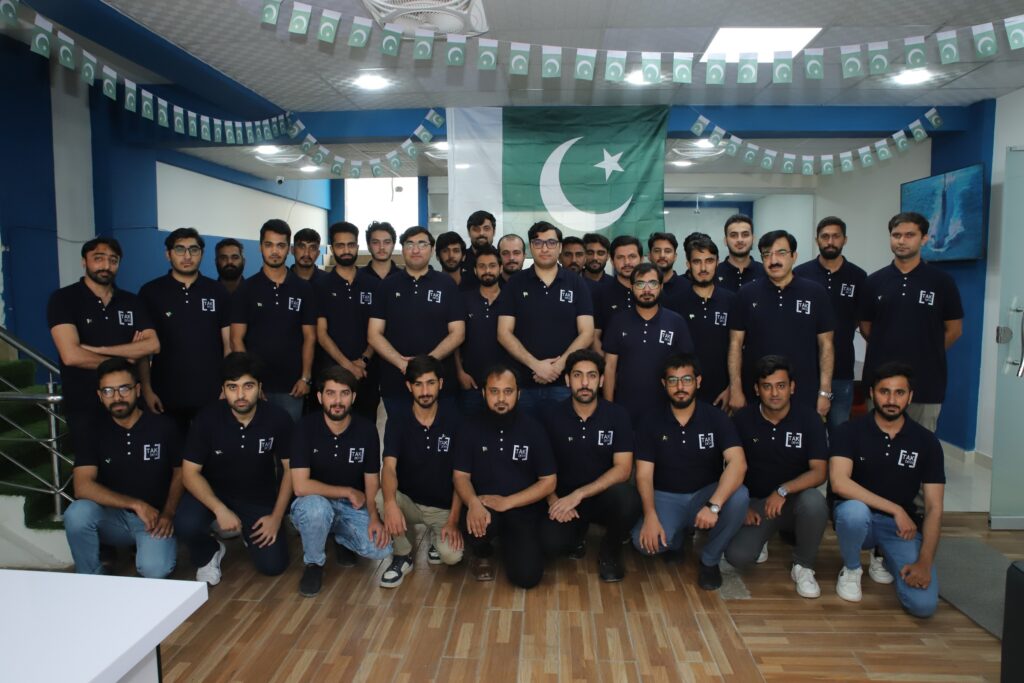
Most vendors either sell rigid, fixed-bid Waterfall projects because it is easier to quote, or they call any loosely planned project "Agile" without the discipline that makes adaptive delivery actually work. TAK Devs treats Speculate, Collaborate, and Learn as an engineering discipline with real guardrails, not a excuse to skip planning.
The TAK Devs delivery rhythm pairs short, mission-led Speculate cycles with dedicated QA as a first-class discipline rather than an afterthought, balancing automated and manual testing so every Collaborate cycle ships something genuinely stable. Learn phases feed directly into the next cycle's plan, backed by the same ISO 9001 quality process across all 150+ projects the team has delivered for clients across the US and Europe.
UpliftCare, a HIPAA-aligned telehealth marketplace, went from concept to a working platform in roughly three months using exactly this rhythm. RegioKI, an agentic AI SaaS platform for SME workflow automation in Germany, and Holiday Horse, a farmhouse accommodation and event marketplace, followed the same adaptive, quality-first approach at very different scales.
TAK Devs Solutions for Building Adaptive, Future-Ready Software
Adaptive delivery touches more than engineering. Here is how TAK Devs' full range of solutions maps onto an ASD-style project, cycle by cycle.
Strategy and Consulting
Discovery workshops and technical feasibility analysis that make the Speculate phase genuinely useful instead of a guessing exercise.
Software Engineering
Product, MVP, and custom enterprise development built for iterative, feature-based delivery from day one.
AI and Data Solutions
Custom AI development that compresses Collaborate and Learn cycles without sacrificing reliability.
Optimization and Quality
Dedicated, balanced automated and manual QA so continuous testing stays affordable across every cycle.
Cloud and DevOps
CI/CD and cloud architecture that let short cycles actually ship, instead of queuing up behind a slow release process.
Security and Compliance
Security reviews and compliance checkpoints built into the cycle for regulated, YMYL-adjacent projects.
Adaptive Software Development: Frequently Asked Questions
The practical questions engineering leaders ask before committing to an ASD-style approach, answered directly.
ASD is an agile methodology built for projects where requirements keep changing. Instead of locking a full plan up front, teams work in short, timeboxed cycles of speculating, collaborating, and learning, adjusting the plan as real feedback comes in.
ASD is one of the direct ancestors of Agile, not a competitor to it. Where Scrum organizes work into fixed-length sprints with defined ceremonies, ASD organizes work around three looser phases (Speculate, Collaborate, Learn) and treats uncertainty itself as the starting assumption, not an exception to plan around.
Jim Highsmith and Sam Bayer developed ASD in the early 1990s, publishing it fully in Highsmith's 1999 book. Highsmith later became one of the 17 original signatories of the Agile Manifesto in 2001.
The three phases are Speculate (a mission-driven, high-level vision instead of a fixed spec), Collaborate (cross-functional teams build and test in tight feedback loops), and Learn (formal reviews and postmortems capture what worked before the next cycle begins). The cycle repeats, timeboxed, for the life of the project.
It can, but it needs guardrails. ASD's flexibility has to be paired with the audit trails, security reviews, and compliance checkpoints regulated software requires. Many teams run a hybrid model: adaptive at the feature level, with fixed compliance gates built into every cycle.
There is no fixed answer, but ASD often carries higher near-term costs because testing and stakeholder collaboration are continuous rather than back-loaded. In exchange, teams typically catch expensive mistakes earlier, which is where the savings show up later in the project rather than at the start.
Yes, arguably more easily than a large one. ASD depends on tight, fast communication, which is naturally easier in a small, well-connected team. The main requirement is experienced people comfortable making decisions without a fully detailed spec in hand.
More relevant, not less. AI tools compress the Collaborate and Learn phases, faster builds and faster test feedback, which means teams can cycle through Speculate, Collaborate, and Learn more often per month than ASD's original authors ever could. The framework's logic holds; the cycle just moves faster.
Mismatched expectations going in. ASD assumes an engaged customer, an experienced team, and a genuine tolerance for a plan that evolves. Projects that adopt the ASD label but keep a fixed-scope, fixed-price mindset underneath tend to produce the same friction Waterfall would, without any of ASD's benefits.
Ready to Build Software That Keeps Up With Change?
If your last project felt like it was locked in before anyone really understood the problem, that is a fixable process issue. Tell us what you are building and we will scope an adaptive, quality-first delivery plan around it.
Talk to TAK Devs