Digital Transformation Company in USA: What This Guide Covers
Every digital transformation company in the USA will show you the same slide deck: a services list, a client logo wall, a promise to "partner with you." None of that tells you whether the team behind it can actually ship. The partner you choose this quarter either becomes the reason your systems finally work together, or the reason you're rebuilding this same project in eighteen months.
What Is a Digital Transformation Company?
A digital transformation company is a technology partner that redesigns how a business operates by combining strategy, software engineering, AI and data work, cloud infrastructure, and ongoing support into one accountable delivery model. Instead of selling a single service, it owns outcomes: a working product, a modernized system, or a measurable operational improvement.
Ask ten agencies what "digital transformation" means and you'll get ten different answers. The useful definition is narrower than most of them.
Most vendors sell one or two of these layers and call it transformation. A UX studio hands you a prototype and moves on before a line of code ships. A staffing firm hands you developers and calls the staffing itself a strategy. A cloud consultancy migrates your infrastructure and leaves the legacy application logic that runs on top of it untouched. Every handoff between vendors is a place where scope gets lost, timelines slip, and nobody is left accountable for the finished result.
A company that owns strategy and UX, custom software engineering, AI and data engineering, cloud and DevOps, dedicated QA, and long-term maintenance under one roof removes those handoffs entirely. That structure is what separates a genuine digital transformation company in the USA from a collection of point solutions wearing the same label.
Why Digital Transformation Is Urgent for US Companies Right Now
Digital transformation has moved from a competitive advantage to a survival requirement because AI-native competitors, rising customer expectations, and compounding technical debt are all accelerating at once. Companies that delay modernization now are widening the gap between what their systems can do and what their market already expects.
McKinsey's 2026 State of AI survey (published August 25, 2026) found that 89 percent of organizations now use AI in at least one business function, and 44 percent have scaled it across the enterprise, up from 38 percent a year earlier. Only 37 percent report any EBIT impact from that investment, and just 6 percent qualify as "high performers" attributing 5 percent or more of EBIT to AI. Adoption has stopped being the differentiator. Execution has become the entire game.
That gap is not evenly spread. The US Census Bureau's Business Trends and Outlook Survey, released in May 2026, found overall AI usage sitting between 17 and 20 percent across all US businesses, with a stark size split: 37 percent of firms with 250 or more employees report using AI, compared with under 20 percent of firms with fewer than 20 employees. Meanwhile Gartner now forecasts worldwide IT spending will reach $6.37 trillion in 2026, up 14.2 percent, with data center systems (the physical backbone behind AI infrastructure) growing 62.5 percent on their own.
Every quarter a company waits, the gap between its systems and its market's expectations gets a little wider, and a little more expensive to close.
None of that urgency is unique to any one sector. It shows up as compliance pressure in legal and health tech, fraud exposure in fintech, margin compression in retail, and staffing costs in every industry trying to do more with the same headcount. The businesses closing that gap are not necessarily the ones spending the most. They are the ones spending it on a partner who can actually finish what they start.
Which US Industries Are Investing Most in Digital Transformation Right Now?
Legal technology, health tech, fintech, automotive and mobility, retail and ecommerce, travel and hospitality, and SaaS are the US sectors investing most heavily in digital transformation in 2026, each modernizing for a different reason: compliance pressure, patient experience, fraud prevention, or straight margin compression.
| Industry | What's driving the spend | Typical priority |
|---|---|---|
| Legal Tech | Document volume, compliance deadlines, client demand for speed | Workflow automation, document AI, case management systems |
| Health Tech | Interoperability mandates, patient experience, staffing shortages | HIPAA-aligned platforms, telehealth, data integration |
| Fintech | Fraud exposure, regulatory scrutiny, real-time expectations | Security-first architecture, compliance automation |
| Automotive & Mobility | Connected vehicle data, software-defined features | Cloud platforms, telematics, embedded software |
| Retail & Ecommerce | Margin compression, personalization at scale | Commerce platforms, AI-driven merchandising |
| Travel & Hospitality | Booking complexity, marketplace competition | Custom marketplaces, integration with supplier systems |
| SaaS | Competitive pressure to ship AI-native features fast | Agentic features, MLOps, rapid product iteration |
The common thread is not the technology. It's that each of these industries has hit a point where the old system, the manual workaround, or the point solution has stopped scaling with the business. TAK Devs has shipped inside several of these sectors directly, including a HIPAA-aligned telehealth marketplace and an agentic AI platform automating SME workflows, both covered in more detail later in this guide.
What It Really Costs to Choose the Wrong Digital Transformation Partner
Choosing the wrong digital transformation partner costs far more than the invoice. Rework, missed market windows, security exposure, and staff attrition from a failed rollout typically multiply the original contract value two to four times over, and most of that cost never shows up as a single line item you can point to.
McKinsey's long-running research on unlocking success in digital transformations found that 84 percent of initiatives fail to sustain the gains they set out to achieve, and only 16 percent both improve performance and lock in that improvement long term. The organizations in that surviving 16 percent share one trait: they treat the initiative as a change in how the business operates, not a one-time software purchase.
Every stage in that funnel is a stage where you're still paying for a team, a cloud bill, and a roadmap, whether or not any of it is compounding into value.
Look at where projects actually die. Some never make it past discovery because the scope was never real to begin with. Others ship a first release that technically works but nobody adopts, usually because QA was an afterthought and the UX shipped half-finished. The ones that make it to adoption often stall there too, abandoned the moment the vendor's contract ends and nobody is left to maintain what was built. Each of those failure points traces back to the same root cause: a partner who owned one layer of the stack and quietly assumed someone else owned the rest.
Digital Transformation Consultancy vs. Specialist Development Partner: What's the Difference?
A digital transformation consultancy sells strategy, workshops, and roadmaps, typically without shipping production code. A specialist development partner builds, tests, and maintains the actual software those strategies depend on. Most companies need both capabilities in one place, because a roadmap nobody can build is just a slide deck with a bigger invoice.
| Partner type | What they're good at | Where it breaks down |
|---|---|---|
| Big strategy consultancy | Frameworks, executive alignment, board-level roadmaps | Rarely writes or ships the software the roadmap depends on |
| Niche point-solution vendor | Deep expertise in one layer, like a single cloud migration | Leaves integration, QA, and long-term ownership to someone else |
| Staff augmentation firm | Fills a skills gap fast when headcount is the bottleneck | Sells headcount, not outcomes; no single party owns the result |
| End-to-end technology partner | Strategy, engineering, AI, cloud, QA, and support under one roof | Fewer vendors credibly do this at scale, which is the real gap |
TAK Devs does not sell staff augmentation, and it does not stop at strategy slides. Every engagement runs through the full lifecycle described earlier: TAK Devs owns the outcome from discovery through long-term maintenance, which is a different commercial relationship than hiring a consultancy and a dev shop separately and hoping the handoff between them holds.
What Separates a Strong Digital Transformation Company From an Average One?
Strong digital transformation companies ship working software early, price against a defined scope, build QA in from day one, and stay engaged after launch. Average ones sell slides, quote a flat fee with no defined scope, treat testing as an afterthought, and disappear once the invoice clears.
Watch what a vendor does in the first meeting, not just what they say. A team that can show you working software by the end of sprint one is telling you something a slide deck can't. A team that quotes one flat number before scoping anything is telling you something too, usually that the real cost will surface later as change orders. Ask who does their QA and when; "we test before launch" is a different answer than "testing is built into every sprint." And ask for two or three named clients you can actually call, not logos on a page.
How Much Does a Digital Transformation Company Charge in the USA?
US digital transformation engagements typically range from $50,000 for a scoped pilot or MVP to several million dollars for enterprise-wide modernization, with most mid-market projects landing between $150,000 and $750,000 depending on compliance requirements, legacy integration complexity, and whether AI components are involved.
| Engagement type | Typical range | Typical timeline |
|---|---|---|
| Discovery workshop / feasibility study | $8,000 to $25,000 | 2 to 4 weeks |
| MVP or AI proof of concept | $50,000 to $150,000 | 6 to 12 weeks |
| Mid-market modernization project | $150,000 to $750,000 | 4 to 9 months |
| Enterprise-wide transformation | $1,000,000+ | 9 to 24+ months |
Compliance requirements move the number more than almost anything else. A HIPAA-aligned health tech platform or a fintech product handling regulated data carries security and audit work a marketing site never will. Legacy integration is the second-biggest driver: connecting a new system to a twenty-year-old core banking platform or an on-premises ERP takes real engineering time that a greenfield build never faces. Fixed-price contracts make sense for tightly scoped work; time-and-materials or milestone-based pricing tends to serve open-ended modernization better, because it lets scope adjust honestly as discovery reveals what the legacy system actually looks like underneath.
The cheapest quote is usually the most expensive project. It's just billed later, in rework.
A 5-Step Framework for Evaluating and Selecting a Digital Transformation Company
Evaluate a digital transformation company in five steps: audit your systems and shortlist three to five vendors, run a structured RFP that scores technical fit over price alone, commission a small paid pilot before any long-term commitment, scale the rollout only after the pilot proves value, then measure results against baseline metrics and renew or renegotiate.
When you build the RFP in step two, score these items instead of chasing the lowest number on the last page:
- Security and quality certifications. ISO 27001 for information security and ISO 9001 for quality management are the two most verifiable signals of process discipline.
- Named, checkable references. Ask for two or three former or current clients you can actually contact, not a logo wall.
- A defined QA methodology. Ask when testing happens in the sprint cycle, not whether testing happens at all.
- Post-launch support terms. Get the maintenance SLA in writing before you sign, not after go-live when your negotiating position has already weakened.
- Team seniority and communication fit. For US and European clients, confirm overlapping working hours and a delivery lead who is directly accountable to you.
What Mistakes Do Companies Make When Choosing a Digital Transformation Partner?
The most common mistakes are picking the lowest bid without a defined scope, skipping reference calls with actual named clients, signing a multi-year contract before a pilot proves the partner can deliver, and assuming AI features can be bolted onto legacy systems without re-architecting the data underneath.
- Choosing price before scope. A flat quote with no scoping document almost always means the real price shows up later as change orders.
- Skipping the pilot. Signing a multi-year contract before seeing a small, working piece of the system is a bet on a slide deck.
- Treating AI as a bolt-on. Adding an AI feature to a legacy system without touching the data layer underneath produces demos that never make it to production.
- Underestimating change management. The best-built system fails if the people who use it every day were never brought into the rollout.
- No plan for what happens after launch. A vendor who never discusses maintenance and support is telling you the relationship ends at go-live.
- Ignoring cross-platform and security testing. Skipping this step is how a product that works in the demo breaks for a quarter of real users.
Digital Transformation Trends Shaping US Companies in 2026 and Beyond
Six forces are shaping US digital transformation heading into 2027: agentic AI moving from pilot to production, AI-native infrastructure investment, a swing toward disciplined ROI over hype spending, security-first design, continued cloud modernization, and a shift toward composable, modular technology stacks.
Forrester's 2026 predictions, published in late 2025, forecast that enterprises will defer 25 percent of planned AI spend into 2027 as financial rigor replaces hype, noting that fewer than a third of decision-makers can currently connect their AI investment to actual financial growth. That is the disciplined ROI trend showing up in real budget decisions, not just analyst commentary.
Security-first design is following the same pattern, driven partly by NIST's Cybersecurity Framework 2.0 guidance on supply chain risk management, which pushes organizations to vet the security posture of every technology vendor and supplier they bring in, not just their own systems. A digital transformation partner who cannot speak to their own supply chain security practices is a weak link in yours.
The remaining trends are more familiar but no less real: agentic AI is moving out of chatbot demos into workflows that take action on their own, cloud spend keeps climbing as infrastructure gets rebuilt for AI workloads, and more companies are choosing composable, modular architectures over monolithic platforms so they can swap in new capabilities without a full rebuild.
Why TAK Devs Is a Digital Transformation Company Built for This Moment
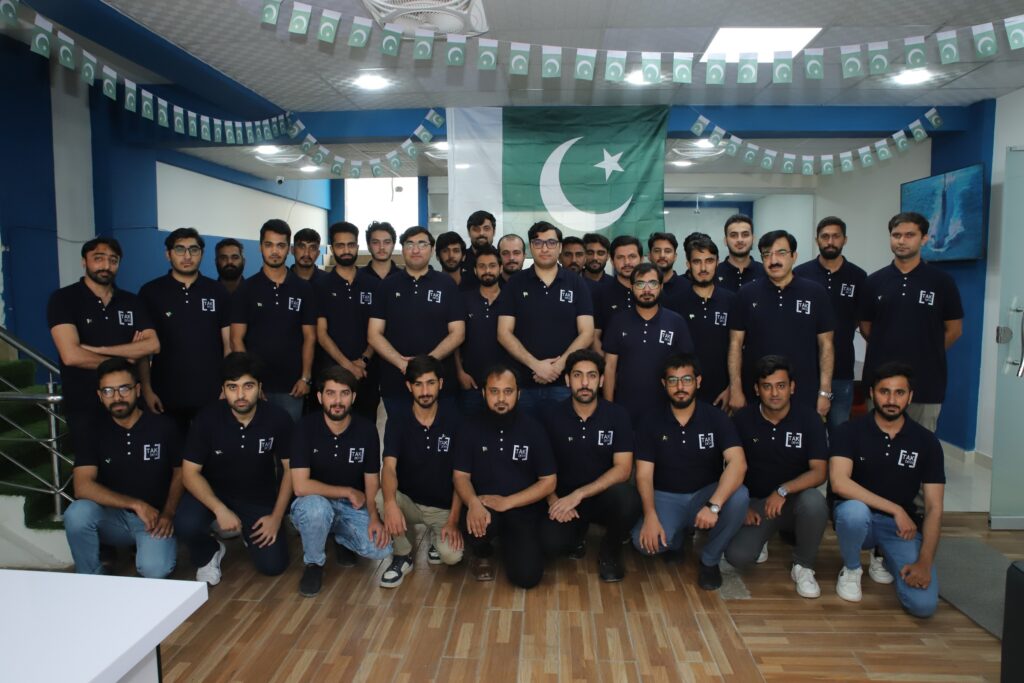
TAK Devs was built around a frustration its founders, brothers Shaheryar and Salman Tariq Khan, kept running into: hiring a strategy firm, a dev shop, a QA vendor, and a cloud team separately, then watching the handoffs between them eat the budget and the timeline. TAK Devs owns the full lifecycle instead, from discovery workshops and UX design through engineering, AI and data work, cloud and DevOps, dedicated QA, and long-term maintenance, as one accountable team.
Recent work includes UpliftCare, a HIPAA-aligned telehealth marketplace delivered in roughly three months, Holiday Horse, a German farmhouse accommodation and event marketplace, and RegioKI, an agentic AI SaaS platform automating SME workflows in Germany. TAK Devs is also recognized by Clutch as a Top Cloud Consulting Company in Pakistan and for Top Web Design and UX for financial services, and is a member of P@SHA.
See the full range of servicesTAK Devs Digital Transformation Solutions
Every digital transformation need maps to one of six solution areas. Here is where TAK Devs fits into your evaluation, mapped against the layers covered earlier in this guide.
AI and Data Solutions
From custom AI development and agentic automation to data engineering and MLOps, this is where most 2026 transformation budgets are heading.
Software Engineering
Product and MVP development, web and mobile apps, enterprise software, and software modernization, backed by UI/UX design.
Cloud and DevOps
Cloud strategy, migration, CI/CD, and managed cloud services, with platform partnerships across AWS, Google Cloud, and Microsoft.
Strategy and Consulting
Discovery workshops, technical feasibility analysis, product strategy, and technology roadmapping before a line of code is written.
Security and Compliance
Security risk assessment, application security testing, and compliance work spanning ISO and GDPR requirements.
Optimization and Quality
Software and UX audits, manual and automated QA, performance optimization, and ongoing maintenance and support.
Frequently Asked Questions About Digital Transformation Companies in the USA
A digital transformation company redesigns how a business operates using technology, combining strategy, software engineering, AI and data work, cloud infrastructure, QA, and ongoing maintenance into one accountable engagement rather than selling a single isolated service.
A scoped MVP or pilot typically takes 6 to 12 weeks, a mid-market modernization project runs 4 to 9 months, and an enterprise-wide transformation can take 9 to 24 months or longer, depending on legacy system complexity and compliance requirements.
Most mid-market digital transformation projects in the USA cost between $150,000 and $750,000, with the exact figure driven mainly by legacy integration complexity, compliance needs, and whether AI components are part of the scope.
IT outsourcing typically fills a specific technical or staffing gap under direction from the client, while digital transformation is an outcome-owned engagement where the partner is accountable for the strategy, the build, and the results, not just the hours worked.
Yes, when the project needs specialized skills your team does not have full time, such as AI engineering, dedicated QA, or large-scale cloud migration, or when your team needs to stay focused on maintaining existing systems while a dedicated partner leads the new build.
Ask for named examples of AI features they have shipped to production, not just shown in a demo, and ask specifically how they handle the data engineering and MLOps work underneath the model, since that layer is where most AI integrations actually fail.
ISO 27001 for information security and ISO 9001 for quality management are the two most widely recognized and independently audited certifications, and they are a reasonable baseline for any partner handling sensitive business systems or data.
Yes, most established digital transformation companies run distributed delivery models with overlapping working hours, a single accountable delivery lead, and regular async and live check-ins, which works well for remote and hybrid US teams.
Ready to Talk to a Digital Transformation Company That Ships?
Get a scoped assessment of your current systems and a clear, priced roadmap. No slide deck required.
Talk to Our Team