
Legacy Modernization Trends in 2026: What This Guide Covers
Published September 10, 2026 · Last updated September 10, 2026
The application that runs your claims, your payroll, or your inventory was never built for the world it now has to survive in. Legacy modernization trends in 2026 are not about chasing whatever tool is newest. They are about whether your core systems can keep up before an AI agent, a regulator, or a faster competitor forces the question for you.
The 2026 Legacy Modernization Landscape: Why Standing Still Got Expensive
Every enterprise IT leader already knows their core systems are aging. What changed in 2026 is how fast the bill comes due.
For enterprise and mid-market IT leaders, the legacy modernization trends that matter most in 2026 all point at the same tension: the systems running the business were built for a slower, more predictable world, and the demands on them (real-time data, AI agents, tighter compliance) are not slowing down to accommodate that. Modernization has quietly moved from an infrastructure line item to a board-level risk conversation.
Two forces are colliding at once. First, technical debt keeps compounding: McKinsey's research on technology debt found that CIOs estimate tech debt at 20 to 40 percent of their entire technology estate's value, and that 10 to 20 percent of the budget meant for new products gets diverted to paying that debt down instead. Second, AI adoption is accelerating faster than most legacy architectures can absorb it. IDC's FutureScape 2026 research projects that by 2027, half of enterprises will be using AI agents to redefine how humans and machines collaborate, which means the integration layer connecting those agents to real business data has to exist well before that.
None of this is unique to Fortune 500 IT departments. Mid-market companies running a decade-old ERP, a homegrown CRM, or a core banking platform feel this pressure just as sharply, often with fewer engineers to absorb it. That is exactly why legacy modernization trends in 2026 look less like a single migration project and more like an ongoing operating discipline.
What Is Legacy System Modernization?
Legacy system modernization is the practice of updating outdated software, infrastructure, or architecture so it can meet current business, security, and integration demands, without necessarily replacing every part of the system at once. It spans everything from updating code and moving to the cloud to rebuilding an application from scratch, depending on how much risk a given system can tolerate.
The phrase gets used loosely, which causes real confusion in budget meetings. Modernization is not automatically a full rewrite, and it is not automatically "just move it to the cloud." It is a spectrum of approaches (covered in full under the 7 Rs framework later in this guide) matched to what a specific system actually needs: some systems need a new interface, some need better APIs, and a small number genuinely need to be rebuilt.
What ties 2026's legacy modernization trends together is the reason organizations are finally acting: aging systems that used to be merely inconvenient are now active blockers to AI adoption, security compliance, and the pace customers expect. A system that was "good enough" in 2019 is often the single biggest constraint on what a company can do with AI in 2026.
The Real Cost of Legacy Systems: Technical Debt, Downtime, and Risk
Technical debt is the accumulated cost of the shortcuts, deferred fixes, and outdated dependencies a system has built up over time, paid back in the form of slower delivery, higher maintenance cost, and rising security exposure. It compounds like financial debt: the longer it goes unaddressed, the more of every future project it consumes.
Ask any CTO what killed their roadmap last quarter, and there is a good chance the honest answer is "the old system, again."
McKinsey's tech debt research describes the pattern bluntly: a company that spends more than half of its IT project budget on integrations and fixing legacy systems is caught in what they call a debt spiral, where the debt itself becomes the largest consumer of engineering time. One cloud provider CIO cited in that same research described cutting the "tech debt tax" on engineering time from 75 percent down to 25 percent after deliberately investing in debt reduction, freeing up roughly half of engineering capacity for work that actually supports business goals.
The risk side compounds too, and it shows up as cash, not just as friction. Every additional year a critical system runs unpatched or loosely governed is another year of exposure, and that exposure has a genuine dollar cost once something goes wrong. It is one more reason "we will get to it next year" is a more expensive decision than it looks on a roadmap slide.
Cloud-First and Composable Architecture Are Now the Default
Nobody is asking "should we move to the cloud" anymore. The question in 2026 is "what sits on top of it."
Cloud migration stopped being the headline trend a few years ago precisely because it worked: most enterprises now run some meaningful share of their estate in the cloud already. What has shifted is the architecture built on top of that foundation. Composable architecture (building a system out of independently replaceable services rather than one monolithic block) is what lets a company add an AI layer, swap a vendor, or expose a new API without touching the core system underneath.
This matters because most legacy modernization programs fail for the same structural reason: they try to replace the core and the surface at the same time. A composable approach separates the two. The legacy core stays in place and stays stable, an integration layer sits on top of it, and new capability (a cloud service, an AI agent, a partner API) gets built against that layer instead of against the fragile original system.
That structure also happens to be exactly what the next section depends on. An AI agent cannot orchestrate across systems that have no clean layer to plug into, which is why cloud-first, composable architecture and agentic AI are really the same trend viewed from two angles.
Agentic AI Is Forcing a Faster Modernization Timeline
Agentic AI modernization is the work of restructuring legacy systems, data, and integrations so autonomous AI agents can take real actions (not just answer questions) inside a company's existing software estate. It is the single biggest force reshaping legacy modernization trends in 2026, because an agent that cannot read or write to your core systems cannot actually do the job it was built for.
This is also the natural next step after the AI chatbot wave of the last few years. A chatbot answers questions from a script or a knowledge base. An agent goes further: it can look up an order, update a record, or kick off a workflow inside the systems your business actually runs on, which is exactly why the integration work underneath it matters so much more.
The numbers back up how fast this is moving. Gartner predicts that 40 percent of enterprise applications will feature task-specific AI agents by the end of 2026, up from under 5 percent in 2025. As Gartner's Anushree Verma put it, "AI agents will evolve rapidly, progressing from task and application specific agents to agentic ecosystems." That is not a distant forecast. It is next year.
Adoption is real but uneven, which is exactly where legacy readiness becomes the deciding factor. Deloitte's Tech Trends 2026 research found that only 11 percent of organizations have agents actually in production despite 38 percent piloting them, and Deloitte's own guidance is blunt about why: companies need to "redesign, not automate" the broken processes underneath, rather than bolting an agent onto a workflow that was never built to be touched by software instead of a person. An agent layered on top of a brittle, undocumented legacy system does not fix the process. It just automates the mess faster. That warning has teeth: Gartner predicts 40 percent of agentic AI projects will be canceled by the end of 2027, largely because of unclear ROI and processes that were never redesigned for an agent to operate in.
The spending is not slowing down while that shakeout happens. IDC projects that agentic systems will account for nearly half of all AI spending by 2029, which means the integration and modernization work behind the scenes is where a growing share of enterprise IT budgets is headed, whether or not that line item is labeled "modernization."
TAK Devs built custom AI development services specifically around this gap: an agent is only as useful as the data and actions it can reach, and for most enterprises that means modernization work has to happen first, or alongside, rather than after the fact.
API-Led Integration: Solving the Middleware Bottleneck
API-led integration is an architecture pattern that exposes legacy data and functionality through standardized APIs, so modern applications, partners, and AI systems can consume it without touching or replacing the underlying system. It is the practical bridge between "the mainframe from 2009" and "the AI agent we are piloting this quarter."
Middleware built for yesterday's batch jobs was never designed to feed a real-time AI pipeline, and pretending otherwise is how "integration tax" becomes the biggest line item nobody budgeted for.
This is where a lot of otherwise well-planned AI initiatives quietly stall. Siloed systems and outdated API support drive up costs through manual workarounds and repeated retraining of both people and models, and the compliance and risk gap only widens as vendor tools evolve faster than the integration platforms meant to connect them. An enterprise can have excellent AI ambitions and still be blocked at the plumbing layer, because the agent needs live, structured, permissioned access, not a nightly export.
- Wrap, do not replace. Put a governed API layer in front of the legacy system instead of ripping it out.
- Govern access centrally. One gateway with real permissioning beats a dozen point-to-point integrations nobody fully documented.
- Design for agents, not just apps. An AI agent needs the same clean, permissioned access a human-facing app gets, often more of it.
The fix is rarely "replace the middleware." It is usually "wrap the legacy system in a well-designed API layer, govern access properly, and let everything else (agents included) talk to that layer instead of the raw system."
Containers, CI/CD, and DevOps as Table Stakes
Containerization, automated testing, and continuous delivery are no longer differentiators. They are the baseline expectation for any modernization program that wants to ship safely and often, and by 2026 most IT organizations treat them as a prerequisite rather than a nice-to-have.
A modernized system that still ships through a manual, quarterly release process is only modernized on paper.
Containers matter because they separate an application from the specific machine (and increasingly, the specific cloud) it runs on, which makes legacy workloads portable without a full rewrite. CI/CD matters because it turns "did this change break anything" from a Friday-night fire drill into an automated, ten-minute answer. Together, they change modernization from a single risky cutover into a series of small, reversible changes, which is the only realistic way to modernize a system that the business cannot afford to take offline.
None of this replaces good architecture decisions. It just means that once you have made them, you can actually ship them without betting the business on a single weekend migration.
Security and Compliance Pressure Is Reshaping Modernization Priorities
Legacy systems age in a specific, unforgiving way: the vendor stops patching, the original engineers move on, and the workarounds pile up until nobody fully understands the attack surface anymore. Regulators and auditors have noticed, and in 2026 compliance requirements (not just security incidents) are one of the biggest drivers pushing modernization budgets loose.
The cost of getting this wrong is not abstract. IBM's 2025 Cost of a Data Breach Report put the global average cost of a breach at 4.44 million dollars, and found that organizations with high levels of shadow AI (employees quietly using unauthorized AI tools against sensitive data) paid an extra 670,000 dollars on average. That second figure matters directly for this guide's topic: an unmodernized system with no governed API layer is exactly the kind of environment where shadow AI usage creeps in, because employees find their own workarounds when the official integration does not exist.
Compliance rigor here means being conservative and specific rather than promising a guarantee. No modernization program eliminates all risk, and for anything touching regulated data (financial records, health information, personal data under GDPR or similar regimes) the right posture is disciplined access control, encryption, and audit logging built into the modernization work itself, not bolted on afterward. Organizations in fintech, health tech, and legal technology should treat this as a design requirement from day one of any modernization scope, and involve their own compliance and legal teams directly rather than relying on a vendor's general assurances.
For a subset of regulated organizations, cloud is not even on the table yet. Banks, government agencies, and healthcare providers with strict data sovereignty rules often need modernization work to happen in on-premises or air-gapped environments, which changes the tooling but not the underlying discipline: the API layer, the governance, and the audit trail still have to exist, they just live inside infrastructure the organization fully controls.
Choosing Your Approach: The TAK Devs 7 Rs Framework
"Just rebuild it" is the most expensive answer in modernization, and it is right for maybe one system in ten.
This is TAK Devs' own practitioner framework, built from repeatedly seeing organizations default to a full rebuild when a lighter approach would have gotten them the same outcome for a fraction of the cost and risk. The classic cloud migration "Rs" (rehost, replatform, refactor, rebuild, replace, retire) cover infrastructure moves well but say little about what changes once AI agents need to act on a system, not just read from it. We use a seventh: reimagine, reserved for the systems that genuinely need to be rebuilt around AI-native workflows from the ground up, rather than modernized incrementally.
| Approach | What changes | Typical effort | Best fit |
|---|---|---|---|
| Rehost | Move as-is to new infrastructure (cloud lift-and-shift) | Low | Stable systems facing only an infrastructure or cost problem |
| Replatform | Small adjustments to run on a modern platform | Low to medium | Systems that work but need better scaling or hosting |
| Refactor | Restructure code internally without changing behavior | Medium | Systems with maintainability or performance problems |
| Rearchitect | Redesign how components fit together | Medium to high | Systems that need new capabilities the current design blocks |
| Rebuild | Rewrite the application from scratch on modern tech | High | Systems too brittle or undocumented to safely change incrementally |
| Retire / Replace | Decommission and adopt an off-the-shelf or new solution | Medium | Systems no longer worth the investment to maintain |
| Reimagine (TAK Devs) | Design an AI-native workflow around agents, not a legacy UI | High | Core workflows where agentic AI changes what "done" even means |
Most enterprises need three or four of these approaches running in parallel across different parts of the estate, not one company-wide strategy. A payments core might warrant a careful rearchitect, while an internal reporting tool that nobody trusts anymore is a clean retire-and-replace.
How These Legacy Modernization Trends Play Out by Industry
Legacy modernization trends are not identical across sectors. The systems at risk, the compliance bar, and the urgency all shift depending on what the business does.
Fintech and financial services
Core banking and payments systems carry the highest compliance bar and the least tolerance for downtime, which pushes most institutions toward incremental rearchitecture over risky rebuilds.
Health tech
HIPAA and similar regulations make governed API access non-negotiable. Patient data has to move through audited, permissioned channels, especially once AI tools enter clinical or administrative workflows.
Retail and e-commerce
Inventory, order management, and personalization engines need real-time data. A batch-driven legacy system quietly caps how personalized or fast the customer experience can get.
Travel and hospitality
Booking and availability systems that cannot integrate cleanly with partner platforms lose bookings to competitors who can sync in real time.
Legal technology and consulting
Document-heavy, compliance-sensitive workflows are prime candidates for agentic AI, but only once the underlying case and document systems expose clean, governed APIs.
B2B SaaS
Platforms carrying years of accumulated feature debt often need a targeted refactor of the core before a new AI feature can ship without breaking three other things.
How TAK Devs Approaches Legacy Modernization
Most vendors pitch modernization as a single, all-or-nothing rebuild. TAK Devs treats it as a portfolio decision: some systems need a full rearchitect, most need a governed integration layer and a disciplined delivery pipeline, and a few just need to be retired. That distinction is what keeps a modernization program on budget instead of turning into a multi-year rewrite nobody signed up for.
This shows up directly in how the team has shipped agentic AI work. RegioKI, an agentic AI SaaS platform TAK Devs built for SME workflow automation in Germany, only works because the agents underneath it have governed, real-time access to the business systems they act on, exactly the integration discipline this guide has been describing. UpliftCare, a HIPAA-aligned telehealth marketplace TAK Devs delivered in roughly three months, shows the other side of the same coin: modernization and compliance rigor moving at startup speed rather than enterprise-glacial speed.
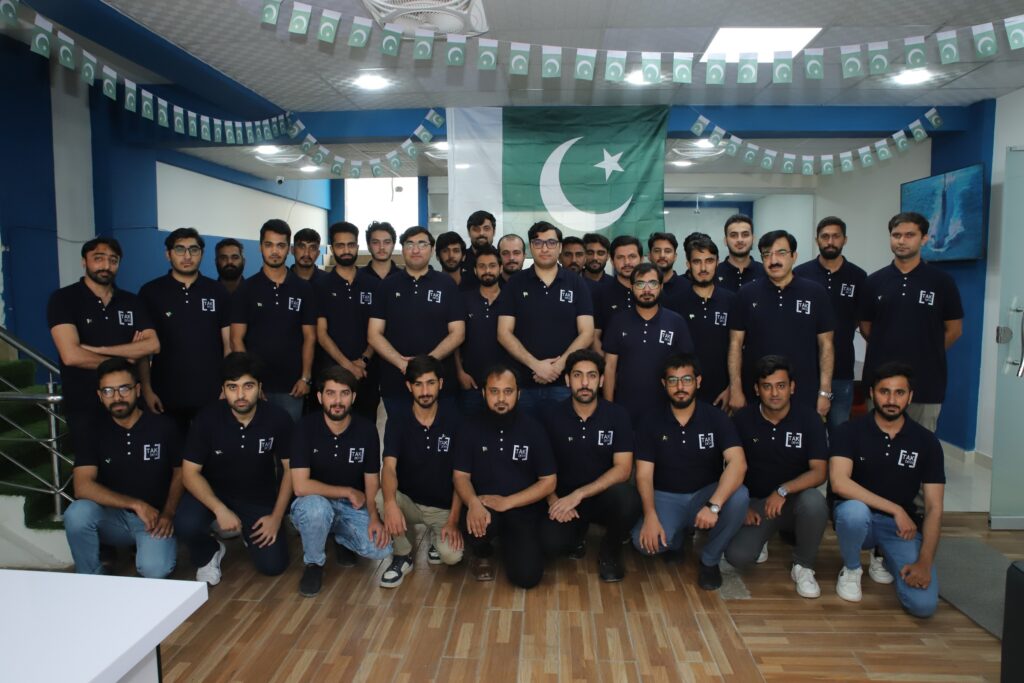
TAK Devs holds ISO 9001 and ISO 27001 certification and has delivered 150+ projects across the US, Europe, and the Middle East, which matters here specifically because modernization work lives or dies on process discipline and security hygiene, not just engineering talent.
From Roadmap to Results: Planning Your 2026 Modernization Program
Do not try to modernize the whole estate at once. Pick the cluster of systems blocking the most value and win that first.
A realistic rollout is staged, and it maps closely to the 7 Rs framework above: assess the estate honestly, stabilize and integrate the systems you are keeping, modernize the highest-priority systems using the right approach for each, layer in AI agents once the integration layer can support them, then scale and measure.
Whichever stage you are starting from, the fastest way to lose a year is picking the wrong first system. TAK Devs' full range of software, cloud, and AI solutions covers everything from the initial estate audit through the API and integration work, the modernization itself, and the AI layer on top of it, so the roadmap above does not have to live only on a slide.
Legacy Modernization Trends: Frequently Asked Questions
The questions IT leaders actually ask before committing budget to a modernization program in 2026, answered directly.
Start with three signals: rising maintenance cost relative to the value the system delivers, an inability to integrate with newer tools or AI agents without manual workarounds, and vendor or security support that has lapsed. If two of the three are true, the system belongs on this year's modernization shortlist, not next year's.
Sometimes, but less often than most teams assume. A rebuild makes sense when a system is too undocumented or brittle to change safely, or when the workflow itself needs to be redesigned around AI agents rather than patched. For most systems, a targeted refactor, replatform, or API wrapper gets the same outcome for a fraction of the cost.
It moves integration work to the front of the queue. An AI agent needs live, governed access to the systems it acts on, so any system an agent will touch needs a proper API layer before the agent project can succeed. Skipping this step is the most common reason agentic AI pilots stall in production.
Cost varies enormously by approach: a rehost or replatform is usually the cheapest option, a refactor or rearchitect sits in the middle, and a full rebuild is the most expensive. The real cost question is not the project price tag, it is the ongoing cost of not modernizing, which McKinsey's research pegs at 10 to 20 percent of the tech budget in debt repayment alone.
Yes, if the work is staged. Composable architecture lets you build an integration layer on top of the legacy core without touching it directly, and CI/CD with automated testing turns each change into a small, reversible step instead of one high-stakes cutover. Disruption usually comes from rushing a big-bang rewrite, not from modernizing carefully.
A focused first phase (assess and stabilize the highest-priority systems) typically runs a few months, not years. TAK Devs delivered a full HIPAA-aligned platform in about three months for one client, which shows what is possible when scope is tight and the approach fits the system, rather than defaulting to a multi-year rebuild.
Aging systems accumulate unpatched vulnerabilities, undocumented access paths, and shadow workarounds as original engineers and vendor support move on. IBM's 2025 breach research found organizations with heavy shadow AI usage, often a symptom of poor legacy integration, paid an average of 670,000 dollars more per breach. Governed API access closes much of that gap.
No, and trying to is usually a mistake. The right approach is to audit the full estate, then apply the right one of the 7 Rs to each system based on its business value and risk. Most organizations run three or four approaches in parallel rather than one company-wide strategy.
Start with the system causing the most integration pain or the most security exposure, not the one that is simply oldest. A smaller, well-scoped pilot on a high-friction system builds the case (and the internal confidence) to fund the next phase, which is exactly how the five-phase roadmap in this guide is designed to work.
Ready to Turn These Legacy Modernization Trends Into a Plan?
If your core systems are the reason your AI roadmap keeps slipping, that is a solvable engineering problem. Tell us what you are running and we will help you scope which systems to modernize first.
Explore Our Custom AI Development Services