AI Agent Voice Search Optimization: What This Guide Covers
For fifteen years, SEO meant one thing: get a blue link onto page one. Then people stopped scrolling and started asking. They ask Siri on the drive home, they ask Alexa while cooking, and increasingly they ask ChatGPT, Gemini, and Perplexity who to trust. The new question is not whether you rank. It is whether the agent says your name out loud.
The 2026 Voice and AI-Agent Search Landscape
Voice used to be a party trick. In 2026 it is the front door, and the front door now has an AI concierge deciding who gets in.
The numbers are not subtle anymore. Industry estimates compiled by Statista put the installed base of voice-enabled devices in the billions, with roughly 8.4 billion in use worldwide and over 150 million Americans actively using voice assistants. Around a third of consumers now run voice searches daily, the kind of queries they used to type. That is a behavior change, not a gadget fad.
What makes 2026 different from 2023 is the layer that sits on top. When someone speaks a question now, the answer often comes from an AI system that summarizes, reasons, and cites, rather than a list of ten links. Google AI Overviews answer a large share of queries before any link is clicked. ChatGPT, Gemini, Perplexity, and Claude have become genuine search front-ends. Apple Intelligence and Microsoft Copilot put an agent one tap away on hundreds of millions of devices.
Put those two shifts together and you get the discipline this guide is about. People search by talking, and a machine decides which single answer to speak or cite back. Optimizing for that reality is what we mean by ai agent voice search optimization, and it is a measurably different game from chasing the old blue link.
What AI Agent Voice Search Optimization Actually Is
AI agent voice search optimization is the practice of structuring your content, data, and authority so that AI assistants and voice agents select and cite your business as the answer to a spoken or conversational query. It extends classic SEO to cover answer engines like Google AI Overviews and generative agents like ChatGPT, Gemini, and Perplexity.
The shift in goal is the whole story. Traditional SEO optimizes for a position in a list. Voice and agent search collapse that list into one response. There is no page two when Alexa reads a single answer aloud, and there is no scrolling when ChatGPT writes a paragraph and names two sources. You are either the answer or you are invisible.
This is why the work goes beyond keywords. You are optimizing for systems that read meaning, weigh trust, and prefer content they can lift cleanly and attribute confidently. Get that right and you show up across every surface at once. Get it wrong and you can rank perfectly on a results page that fewer people ever look at.
How Agent and Voice Search Differs From Traditional SEO
The core difference is that voice and AI-agent search return one answer instead of a page of options. Queries are longer and conversational, intent is sharper, and the winner takes everything. Optimizing for it means writing complete, quotable answers rather than keyword-tuned pages built for scrolling.
Voice search is not text search with a microphone. It is a different shape of question with a different shape of answer.
Three differences matter most in practice. First, query length and phrasing. Nobody types "best Italian restaurant NYC" into their phone and then speaks it the same way. They ask, "what's the best Italian place near me that's open right now?" The query carries context, location, and timing baked in.
Second, intent clarity. When someone takes the time to ask a full question out loud, they are usually further along in a decision. They want a specific, actionable answer, not a research session. Your content has to satisfy that intent in the first breath.
Third, the winner-take-all dynamic. A text searcher can scan ten results and pick. A voice user hears one. An agent user reads a synthesized answer that may cite two or three sources by name. This is what makes the field so competitive, and why being merely good is not enough. The answer has to be the clearest, most complete, most trustworthy version of itself.
How an AI Agent Decides on a Single Answer
You cannot optimize for a system you do not understand, so here is the pipeline behind a spoken query, without the mystique. It runs in well under a second, and each stage quietly filters who is eligible to be the answer.
- Speech to text. Speech recognition converts the spoken query into text, now with accuracy above 95% in good conditions. Accents, noise, and phrasing still trigger clarifying questions.
- Language understanding. Natural language processing models, descendants of Google’s BERT and MUM work, identify entities and the true intent behind the words rather than matching keywords.
- Knowledge and retrieval. The agent pulls from knowledge graphs, your structured data, business directories, and the open web, connecting facts and relationships across sources.
- Selection and synthesis. It weighs authority, relevance, freshness, speed, and clarity, then composes one answer that is concise enough to speak and trustworthy enough to attribute.
Notice what that last stage rewards. The system is not looking for the page with the most keywords. It is looking for the source it can quote with the least risk. Clear, accurate, well-structured, and demonstrably credible content wins, because the agent is staking its own reputation on the answer it gives.
The Convergence: One Answer Across Every Surface
The line between voice search and AI chat has basically dissolved. Ask Siri, ask ChatGPT, ask Gemini. From the user’s side, it is all just asking.
This is the single most important development for marketers in 2026. When someone speaks to Siri, that is voice search. When they ask Claude or Gemini a question, that is conversational AI. From the user’s perspective these experiences feel identical, and your content needs to win in all of them at once. The good news is that the same fundamentals serve every surface.
A serious strategy now plans for visibility across a stack of surfaces rather than a single results page. Your content should be eligible to appear in traditional Google results, in AI Overviews, as a featured snippet at position zero, in spoken responses from Siri, Alexa, and Google Assistant, in conversational answers from ChatGPT, Gemini, Perplexity, and Claude, and in platform assistants like Microsoft Copilot and Apple Intelligence.
That sounds like a lot of channels to chase. It is really one job done well. Each of these systems is trying to find the clearest, most authoritative, best-structured answer to a question. Build that once, and you become eligible everywhere. The mistake is treating each surface as a separate campaign instead of optimizing the underlying answer.
AEO vs GEO vs SEO: What You Are Actually Optimizing For
SEO targets search rankings, Answer Engine Optimization (AEO) targets being chosen as the direct answer, and Generative Engine Optimization (GEO) targets being cited inside AI-generated responses. AI agent voice search optimization needs all three working together rather than as competing tactics.
The vocabulary is new but the logic is simple. SEO is the foundation: technically sound, relevant, authoritative pages. AEO layers on the discipline of being the single best answer to a specific question, which is what wins featured snippets, voice responses, and AI Overviews. GEO targets the generative systems specifically, making sure your brand gets named when ChatGPT or Perplexity composes an answer from multiple sources.
You do not pick one. They stack. A page with no SEO foundation will not be crawled or trusted. A page with great SEO but no answer-first structure will rank and still lose the spoken answer. A page that nails both but is never cited by name in generative tools is missing the fastest-growing discovery channel of 2026. The work in the rest of this guide is really the work of doing all three at once.
The Core Factors That Get You Cited in 2026
Agents weigh content differently than a classic ranking algorithm does. Speed and authority still matter, but the bar for clarity and trust is far higher because the system has to commit to one answer. Here are the factors that actually move the needle, ordered by how often they decide the outcome.
- Content authority and E-E-A-T. Agents pull from sources they trust. Author bios, credentials, citations, comprehensive coverage, and regular updates all signal the experience, expertise, authoritativeness, and trust that Google’s helpful content guidance rewards.
- Answer-first structure. A direct, self-contained answer in the first 40 to 60 words after a question heading is what gets lifted into snippets, voice, and AI summaries.
- Structured data and schema. Schema markup tells the system exactly what your content is and how it is organized, which makes it far easier to select and cite.
- Speed and mobile performance. Voice results load fast for a reason. Most voice and agent queries happen on mobile, and mobile-first indexing means your mobile experience is what gets judged.
- Conversational completeness. The best answer anticipates the follow-up question, includes context, and reads naturally when spoken aloud, so the agent never needs a second source.
Think of it as a filter, not a checklist. Content that fails any one of these stages quietly drops out before it is ever considered for the spoken or cited answer. Clear all of them and you move from eligible to chosen.
Building Content AI Agents Actually Want to Quote
Authority gets you considered. Structure gets you quoted. The two have to work together, because an agent will skip a brilliant page it cannot parse in favor of a clear one it can. The goal for every section you publish is to make the lift effortless.
Start with the questions your audience actually asks, in their words. Tools like Answer the Public, AlsoAsked, and the People Also Ask box surface the real phrasing. Build pages around those questions, then answer each one directly before you add depth. A perfectly phrased question with moderate search volume often converts better than a high-volume but awkward keyword.
Write the answer first, then earn the right to elaborate. The agent reads the first sentence and decides everything.
A few formatting habits do most of the heavy lifting. Use short paragraphs of two or three sentences. Phrase headings as the questions people ask. Put the concise answer right under the heading, in the first 40 to 60 words, then expand with examples, data, and context. Use lists when the content is genuinely a list, and tables when you are comparing options. Bold the words that carry the answer so a skimming reader, and a parsing model, both get the gist fast.
Underneath all of that, think in entities and clusters, not isolated posts. Build a pillar page that covers a topic broadly and cluster pages that go deep on subtopics, then link them so the relationships are obvious. That is how you establish topical authority, which is what convinces an agent that you are a credible source on the subject rather than a one-off page that happened to match.
Schema, Structured Data and the New llms.txt
Schema markup is structured code that tells search engines and AI agents exactly what your content means, which makes it dramatically easier for them to select and cite. In 2026 it pairs with llms.txt, a file that gives AI crawlers a clean, prioritized map of your most important content.
Schema is the translation layer between your page and the machine. Implement the types that match your content: Google’s structured data documentation covers FAQ, How-To, LocalBusiness, Product, Review, Article, and Event among others. FAQPage schema in particular is one of the highest-leverage moves for voice and answer engines, because it hands the system a clean question-and-answer pair to read back.
The newer piece is llms.txt. Proposed as a simple standard at llmstxt.org, it is a plain-text file at the root of your site that points AI systems at your most important, well-structured content in a format they can ingest cheaply. It is early, adoption is uneven, and it is not a magic ranking lever. But it is low-cost insurance for a world where AI crawlers are becoming a meaningful share of who reads your site. Treat it as a complement to schema, not a replacement.
Because this is content that AI systems will read, interpret, and repeat to your customers, getting the data layer right is squarely an engineering problem. It is the kind of work our custom AI development services handle when an organization needs structured data and AI-readable content done properly rather than bolted on.
The Technical Foundations You Cannot Skip
Great content on a slow, unreadable site is a great answer nobody hears. Technical SEO is the price of admission, not the prize.
Three technical elements decide whether your content is even in the running. None of them are glamorous, and all of them are non-negotiable for voice and agent visibility.
- Speed. Voice and agent users expect immediate answers. Slow pages get filtered out before content quality is ever evaluated. Compress images, cut render-blocking scripts, and test with PageSpeed Insights.
- Mobile-first everything. The majority of these queries happen on phones, and Google evaluates your mobile site for ranking. Responsive design, readable fonts, and thumb-friendly navigation are baseline.
- Crawlability and clean markup. If AI crawlers cannot reach or parse your content, none of the above matters. Clean HTML, sensible internal linking, and a current sitemap keep you readable.
Treat AI agents as a new and demanding class of visitor. They are fast, literal, and unforgiving of clutter. A site that serves them well almost always serves human visitors better too, which is the quiet upside of doing this work.
Local Voice Search Domination
Local voice search optimization means keeping your business data accurate and consistent everywhere an agent might check, so it confidently recommends you for "near me" queries. A large share of voice searches have local intent, which makes this one of the highest-return plays for any business with a physical presence.
When someone asks, "where's the best coffee near me that's open now," the agent assembles an answer from your Google Business Profile, directory listings, reviews, and website. Any inconsistency, a wrong phone number here, an old address there, gives it a reason to recommend someone else. Local optimization is mostly the unglamorous discipline of being correct everywhere.
- Complete your Google Business Profile. Hours, services, categories, photos, and the questions customers ask. Treat it as a primary page, not an afterthought.
- Keep NAP consistent. Name, address, and phone must match exactly across every directory and platform. Inconsistency erodes the confidence an agent needs to recommend you.
- Earn and answer reviews. Volume, recency, and your responses all feed the trust signal. Agents favor businesses with active, well-reviewed profiles.
- Create location-specific content. Pages and FAQs that use natural location language and answer real local questions help you own the "near me" moment.
Industry-Specific Voice and Agent Plays
Voice and agent search is not one-size-fits-all. The query patterns, the trust bar, and the highest-value moments shift by sector. Here is where to focus depending on what you sell.
Retail and e-commerce
Optimize product content for natural questions ("what are the best running shoes for flat feet?") and reviews. The buying moment increasingly starts as a spoken question, not a category browse.
Healthcare
Answer common health and access questions clearly and conservatively. The trust bar is highest here, so credentials, accuracy, and cautious language matter more than clever copy.
Hospitality and tourism
Win location-based queries about availability, amenities, and "things to do near" with detailed, voice-friendly descriptions and an immaculate local profile.
Finance and banking
Answer practical money questions accurately, and treat security as part of the content. Conservative, well-sourced answers earn the citation in a high-scrutiny field.
Local services
Trades, clinics, and field services live or die on "near me" and "open now." NAP consistency, reviews, and clear service-area pages do most of the work.
B2B and software
Comparison content ("X vs Y"), definitions, and how-to answers get cited heavily by AI agents researching on a buyer’s behalf. Be the clearest explainer in your category.
Measuring What You Cannot See Directly
Here is the uncomfortable truth: you cannot see most voice and agent queries directly. You can still measure the outcome, you just have to triangulate.
Analytics tools generally cannot tell a voice query from a typed one, and generative tools rarely pass clean referral data. So you measure the signals that move when your agent visibility improves, rather than the queries themselves.
- Featured snippet and position-zero share. Track how often you own the answer box. It is the closest proxy for voice eligibility you have.
- Long-tail, question-based rankings. Rising visibility for conversational queries in Search Console is a strong sign you are winning spoken queries too.
- AI assistant citation checks. Periodically ask ChatGPT, Gemini, Perplexity, and Claude the questions you target and record whether your brand is named. Crude, but it is the most direct GEO signal available.
- AI crawler and referral traffic. Watch server logs and analytics for AI bot activity and any referral traffic from assistant platforms. The trend line matters more than the absolute number.
Pair these with Google Analytics 4 and Search Console for the fundamentals. No single metric proves voice success on its own, but together they tell you reliably whether you are moving from invisible to cited.
The Mistakes That Keep You Uncited
Most failures here are not exotic. They are the same handful of avoidable errors, repeated. Knowing them is half the fix.
- Burying the answer. A 300-word windup before the actual answer means the agent gives up and quotes someone clearer. Lead with the answer.
- Keyword stuffing. Writing for the old algorithm reads as untrustworthy to a model that understands language. Write for the human; the agent is judging the same thing.
- Skipping schema. No structured data means the system has to guess what your content is. Most of the time it guesses someone else.
- Inconsistent business data. A mismatched address or phone number across directories quietly disqualifies you from local voice answers.
- Treating it as one-and-done. Models, surfaces, and competitors change constantly. This is an ongoing practice, not a project you finish.
How TAK Devs Approaches AI Agent Voice Search
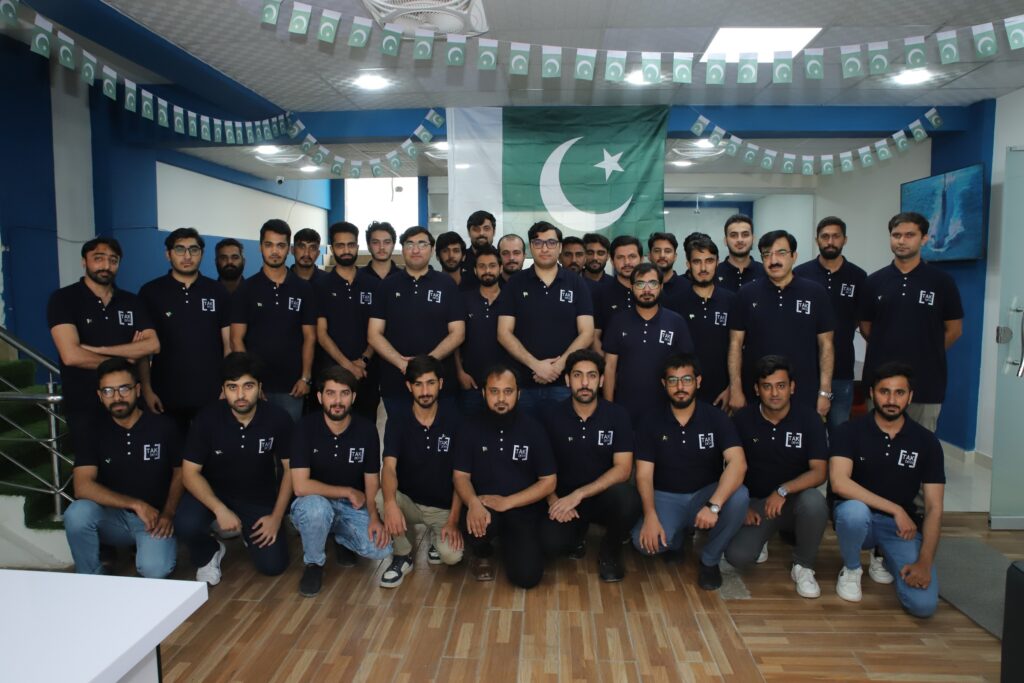
Most agencies bolt voice and AI onto an SEO checklist. The team at TAK Devs comes at it from the other side: we are an engineering and AI shop that treats this as a data and systems problem, because that is what it has become. Getting cited by an AI agent is, underneath the marketing language, a structured-content and authority engineering challenge.
That shapes the work in three ways. First, we build the data layer properly. Clean schema, AI-readable content, FAQ and How-To structures, and llms.txt where it helps, all implemented so machines parse them without guessing. Second, we measure the outcome rather than vanity metrics, tracking snippet share, conversational rankings, and actual citations across the major assistants. Third, we scope tight and prove value on a focused set of high-intent questions before expanding, so you see movement before you see a large invoice.
We have spent years shipping production AI and data systems for teams that cannot afford guesswork. That bias toward reliable, maintainable, measurable work is exactly what AI agent visibility rewards, because the agents themselves are optimizing for trust and clarity, not cleverness.
Your 2026 AI Agent Voice Search Action Plan
Do not try to optimize everything at once. Pick the questions that matter most to your business and win those first.
A sane rollout is staged. You do not need every page agent-ready on day one. You need one cluster of high-intent questions that you own completely, which builds confidence and funds the next phase.
- Audit visibility. Ask the assistants the questions that matter to your business and record where you do and do not appear today.
- Restructure content. Rewrite priority pages answer-first, with question headings and concise 40 to 60 word answers up top.
- Add schema and llms.txt. Mark up FAQs, how-tos, and local data, and give AI crawlers a clean map of your best content.
- Build authority. Strengthen E-E-A-T with author credentials, citations, depth, and freshness so agents trust you as a source.
- Publish, measure, refine. Ship, track snippet share and citations, fix what underperforms, then repeat on the next question cluster.
When you want to see how this maps onto your specific environment, our full range of AI and software solutions covers everything from the initial visibility audit through structured-content engineering and ongoing measurement.
AI Agent Voice Search Optimization: Frequently Asked Questions
The questions business leaders actually ask before committing to a voice and AI-agent strategy, answered straight.
Yes, though it builds on SEO. Regular SEO aims to rank in a list of links. AI agent voice search optimization aims to be the single answer that gets spoken or cited by assistants like Siri, ChatGPT, and Gemini. You still need solid SEO as the foundation, then you add answer-first structure, schema, and authority signals so a machine can select and quote you confidently.
Make your content the clearest, most authoritative answer to specific questions, then make it easy to parse. In practice that means direct answers in the first 40 to 60 words, FAQ and How-To schema, strong E-E-A-T signals, and consistent mentions across the web. Generative tools cite sources they trust and can lift cleanly, so clarity and credibility do most of the work.
Yes, and you should. They share the same foundation. One well-structured, authoritative answer can win a Google ranking, a featured snippet, a spoken voice response, and a citation in an AI summary simultaneously. The mistake is running separate campaigns. Optimize the underlying answer once and you become eligible across every surface, which is more efficient than chasing each channel separately.
AEO (Answer Engine Optimization) targets being chosen as the direct answer in featured snippets, voice responses, and AI Overviews. GEO (Generative Engine Optimization) targets being cited inside AI-generated responses from tools like ChatGPT and Perplexity. AEO is about owning the answer box; GEO is about being named when a model composes an answer from several sources. You want both, on top of solid SEO.
Very. Schema is the translation layer that tells agents exactly what your content means, so they do not have to guess. FAQPage and How-To schema are especially high-leverage because they hand the system a clean question-and-answer pair to read back. Without structured data, well-written content often loses to a clearer-marked competitor. It is one of the highest-return technical moves you can make.
It is useful, low-cost insurance, not a magic lever. llms.txt gives AI crawlers a clean, prioritized map of your best content. Adoption is still uneven and it will not single-handedly get you cited. But as AI crawlers become a real share of who reads your site, having one is a cheap hedge. Treat it as a complement to proper schema and structured content, not a replacement.
You measure proxies. Track your featured snippet and position-zero share, rankings for long-tail question queries in Search Console, and run periodic citation checks by asking the major assistants your target questions and recording whether you are named. Add GA4 and AI crawler activity from your logs. No single number proves it, but together they show the trend reliably.
Often yes, especially locally and on specific questions. Agents reward the clearest, best-structured, most trustworthy answer, not just the biggest brand. A focused small business that nails a tight set of high-intent questions, keeps its local data immaculate, and earns genuine reviews can beat a large competitor whose content is generic. Specificity and accuracy are the great equalizers here.
Expect weeks to a few months, depending on your starting authority. Technical fixes and schema can surface in featured snippets fairly quickly, while authority-driven citations in generative tools build more gradually. The fastest path is to scope a focused cluster of questions, win those, then expand. It is an ongoing practice, so treat early wins as proof to fund the next phase, not the finish line.
Ready to Get Cited, Not Just Ranked?
If your customers are asking AI agents who to trust and your name is not coming up, that is a fixable engineering problem. Tell us about your site and we will scope a focused set of high-intent questions to win first.
Explore Our Custom AI Development Services