
The 10 Benefits of Custom Software Development at a Glance
Most businesses reach a point where their tools start working against them. Manual workarounds pile up. Systems refuse to talk to each other. Your team spends more time managing software than running the business. Custom software exists to solve exactly this problem.
What Is Custom Software Development?
Custom software development is the process of designing, building, and deploying software engineered specifically around your business, your workflows, your users, your data, and your goals. It goes by several names: bespoke software development, tailored software, purpose-built applications. They all mean the same thing: software written for you, not for the mass market.
The output can take many forms. It might be an internal operations platform that replaces a stack of disconnected SaaS tools. It might be a client-facing web application with capabilities no off-the-shelf product offers. It might be an API integration layer that finally connects your CRM, your ERP, and your billing system. Or it might be a complete product that becomes the core of your business model.
Custom software is not reserved for large enterprises. Startups use it to build differentiated products from day one. Mid-size companies use it to escape the limitations of generic tool stacks. Enterprises use it to modernize legacy systems without disrupting active operations. The common thread is a business need that standardized software cannot fully meet.
The question that matters is not whether you can afford custom software. It is whether you can afford to keep operating with tools that were never designed for how your business actually works.
Honest Pros and Cons of Custom Software Development
Custom software is not the right answer for every situation. Here is an honest breakdown of where it excels and where it requires careful consideration, so you can make an informed decision.
Advantages
- Built exactly around your workflows, not a vendor's assumptions
- No recurring per-seat licensing fees that compound over time
- Full control over your data, security model, and infrastructure
- Scales with your growth rather than against a vendor roadmap
- Compliance can be embedded from the ground up
- Unique capabilities competitors cannot simply replicate by subscribing
- Updates happen when your business needs them, not on a vendor's schedule
- Automates your specific processes, including edge cases generic tools ignore
Considerations
- Higher upfront investment compared to off-the-shelf subscriptions
- Longer initial build timeline before the team can use it
- Requires clear requirement documentation before development begins
- Ongoing maintenance is your responsibility, not a vendor's
- Choosing the wrong development partner carries real project risk
- May be over-engineered for simple use cases a SaaS tool handles fine
Software That Adapts to Your Business, Not the Other Way Around

Every workaround your team performs is evidence that your current software was not built for your business.
Off-the-shelf software is designed for the widest possible audience. To serve thousands of different businesses, it has to make assumptions about how teams are structured, how decisions flow, and what data matters. Most of those assumptions will be wrong for your specific situation. Not completely wrong, but enough to create friction every single day.
When you invest in custom software development, every screen, workflow, and data structure is designed around how your team actually operates. Your approval process, your naming conventions, your reporting hierarchy, your edge cases. The system reflects your reality, not a hypothetical average business.
The practical result is significant. Teams using software built for their exact processes spend less time on workarounds, make fewer data entry errors, onboard new staff more quickly, and report higher adoption rates because the tool behaves the way people expect it to.
- Workflows mirror your internal processes without compromise or awkward workarounds.
- Features exist because your team needs them, not because of a vendor's product roadmap decision.
- Custom user roles and access permissions reflect your actual org structure and accountability model.
- Dashboards and reports surface the exact metrics your business tracks, not a generic preset.
- The UI and language of the system matches the terminology your team uses, reducing training time.
Scalability That Keeps Pace with Your Growth, Not a Vendor's Roadmap

The most common reason businesses outgrow their software is that the software was never architected for their growth trajectory.
Off-the-shelf platforms grow according to their vendor's priorities, not yours. You wait for features that are on their roadmap. You hit user limits that require an expensive plan upgrade. You discover that the architecture that works fine at 50 users starts groaning at 500. None of that is in your control.
Custom software is architected with your growth path in mind from the start. Whether that means handling ten times your current user load, adding new functional modules as the business expands, or connecting with systems that do not yet exist, a well-built platform is designed to grow alongside you rather than become an obstacle to that growth.
This extends to technical infrastructure. Your development team can make deliberate choices about database architecture, caching layers, microservices boundaries, and horizontal scaling configurations that match your specific performance requirements, not a one-size-fits-all architecture.
- Architecture is designed for your growth trajectory from day one, not retrofitted later.
- New modules and capabilities can be added without rebuilding the entire system from scratch.
- Performance is optimized for your specific data volumes and usage patterns, not an average.
- Infrastructure scales horizontally or vertically as your user base and data volumes grow.
- You are never forced into a vendor's premium tier simply because your team grew.
Complete Data Ownership and Control Over Your Most Valuable Asset

With most SaaS platforms, your customer data, transaction records, and operational history live on servers owned and controlled by a third party. Is that an acceptable arrangement for your business?
When you use off-the-shelf software, your data typically lives on the vendor's infrastructure. You are subject to their data residency policies, their security architecture, and their decisions about how and where your information is stored and processed. If they are acquired, breached, or simply change their terms, your options are limited.
Custom software gives you complete authority over your data. You choose the hosting environment, the encryption standards, the access control model, and the retention policies. In regulated industries like healthcare, finance, legal, and defense, this level of control is not optional. It is a compliance requirement that generic SaaS platforms often cannot meet without expensive add-ons or contractual workarounds.
Data portability is another critical consideration. With custom software, migrating, exporting, or transforming your data is a development decision you control, not a vendor policy you must negotiate around.
- Data stays on infrastructure you select and control, not a shared multi-tenant vendor environment.
- Encryption, access policies, and retention rules are configured specifically for your requirements.
- There is no vendor lock-in that threatens your access to your own business-critical data.
- Audit trails and access logs are structured precisely for your compliance and governance framework.
- Data residency requirements for specific geographies or regulatory jurisdictions can be met precisely.
Security Architecture Built for Your Specific Threat Model

Every major SaaS platform is a high-value attack target. One successful exploit does not affect one business. It affects every customer on the platform simultaneously.
Off-the-shelf software carries an inherent security risk that is structural rather than situational. Because it serves thousands of businesses, compromising it once yields thousands of victims. This makes large SaaS platforms attractive targets for sophisticated attacks. Vendors respond to vulnerabilities when they can, but the patch timeline is entirely outside your control.
Custom software changes this equation in two important ways. First, your application does not appear on widely distributed attack surface scanners the way known commercial products do. It does not attract the same automated exploitation attempts that commodity tools face daily. Second, your security controls are designed specifically for your threat model, your user base, and your data classification requirements, not applied as a generic layer across millions of accounts.
- No shared vulnerability surface with other businesses on the same platform or vendor infrastructure.
- Security architecture is matched to your specific industry, user base, and data sensitivity.
- GDPR, HIPAA, PCI-DSS, and SOC 2 compliance requirements are embedded from the first design decision.
- Penetration testing and security reviews are conducted against your actual implementation, not a generic version.
- You control when security patches are applied and how they are tested before deployment.
Seamless Integration with Your Existing Tech Stack and Legacy Systems
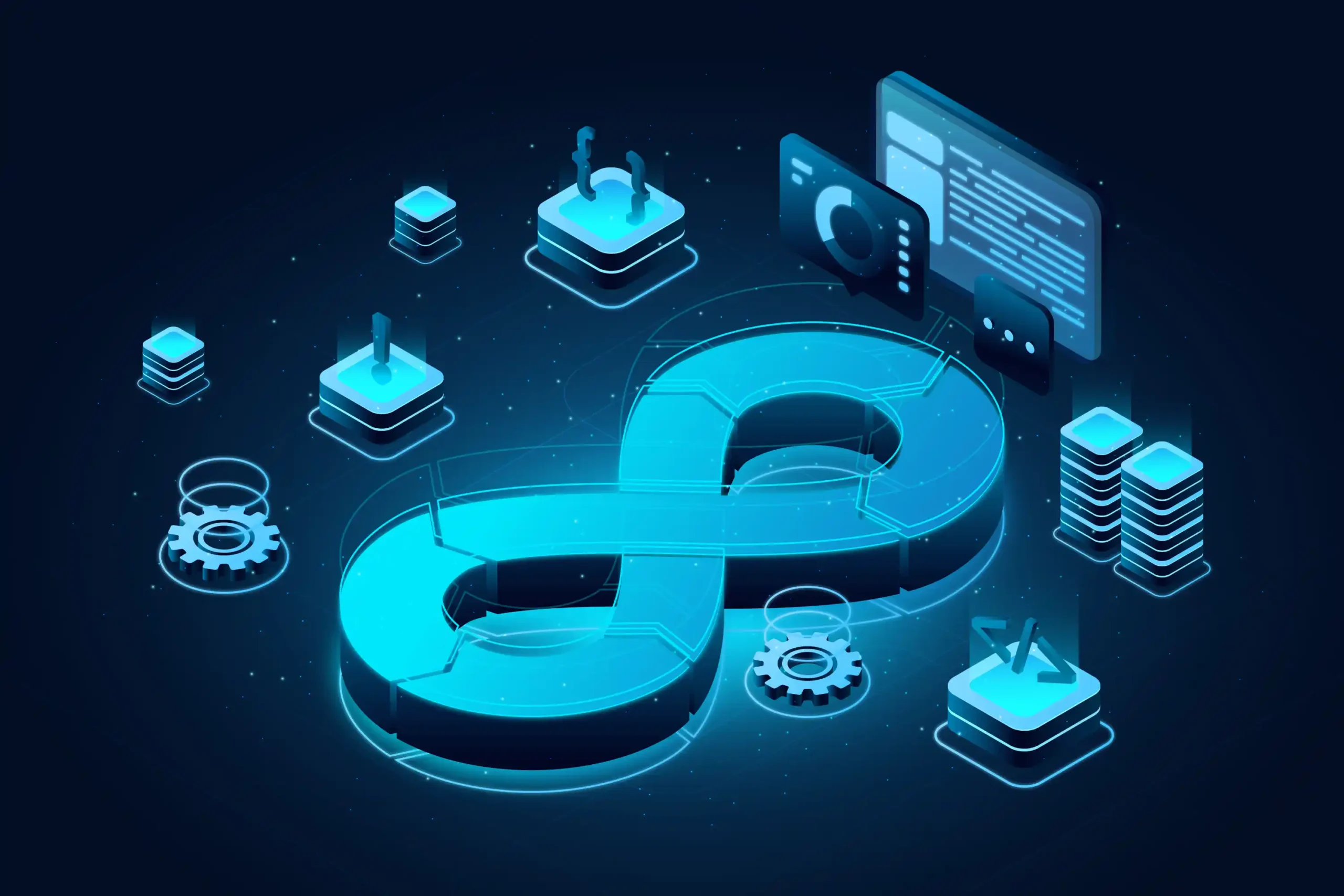
Your business does not run on one tool. It runs on twelve tools that were never designed to communicate with each other. Your software should fix that, not add to it.
The typical mid-size business runs a CRM, an accounting system, a marketing platform, a project management tool, an industry-specific application, and some spreadsheets nobody wants to admit are load-bearing infrastructure. Off-the-shelf software only integrates with the partners its vendor has chosen to support. If your existing system is not on their partner list, the integration either does not exist, costs extra, or requires a third-party connector that adds more fragility.
Custom software is built to integrate with your specific technology environment from the beginning. This includes modern cloud APIs, legacy on-premise systems through adapter layers, data warehouses, real-time event streams, and industry-specific platforms that mainstream SaaS tools have never heard of.
- APIs are designed to connect with your specific systems, not a curated vendor partner list.
- Data flows between tools automatically and in real time, without manual export, import, or reconciliation.
- Legacy systems can be connected through adapter layers rather than replaced prematurely.
- Data silos that slow down decisions and create conflicting versions of the truth are eliminated at the root.
- Integration scope extends beyond any vendor's partnership roster to any tool with an accessible API.
Long-Term Cost Efficiency That Off-the-Shelf Cannot Match

The real question is not what custom software costs to build. It is what the wrong software costs you every single year you keep using it.
The most cited objection to custom software development is the upfront investment, and it is a fair concern. A purpose-built platform costs more to start than a SaaS subscription. But the comparison looks very different when you extend the time horizon to three or five years and account for the full cost of staying with generic software.
SaaS licensing fees compound annually. Per-seat pricing grows with your headcount. Premium feature tiers unlock as you grow. Workaround tools get added to patch gaps. Integration middleware gets bolted on to connect systems that should never have been separate. Add the cost of employee time spent on manual processes that custom software would automate, and the total cost of your generic software stack often significantly exceeds the cost of a purpose-built alternative.
- No recurring per-seat licensing fees that scale with every new hire.
- You never pay for feature tiers you do not use or capabilities irrelevant to your business model.
- Automation eliminates the ongoing labor cost of manual processes that generic tools force on your team.
- Updates and enhancements happen when your business needs them, not on an external vendor's timeline.
- For most scaling organizations, total cost of ownership over five years is lower than the SaaS equivalent.
Regulatory Compliance Embedded From the Start, Not Retrofitted Later

Retrofitting compliance into software that was not designed for it is expensive, slow, and frequently incomplete. Build it correctly the first time.
Whether your business operates under GDPR, HIPAA, PCI-DSS, SOC 2, ISO 27001, FCA regulation, or sector-specific standards, compliance is not a feature you add later. It is a design decision that affects how data is stored, how it flows between systems, who can access it, and how every access event is recorded.
Generic software was built for the broadest possible market. Its compliance tooling is necessarily generic as well. You get controls that satisfy the most common requirements but often require additional work, third-party add-ons, or manual processes to meet the specific requirements of your jurisdiction, industry, or contractual obligations.
Custom software lets you build compliance requirements directly into the system logic from the first sprint. Data residency, audit logging, consent management, role-based access control, data minimization, and breach notification workflows are all configured for your specific regulatory context, not bolted on after the fact.
- Compliance controls are embedded in data handling and system logic from day one, not added later.
- Audit logging, consent management, and data residency are configured for your specific jurisdiction.
- Regulatory changes are handled through targeted, controlled updates rather than full platform migrations.
- Documentation and evidence trails are structured for your specific compliance framework and audit process.
- Multi-jurisdiction businesses can meet differing regional standards within a single platform.
Competitive Differentiation Through Capabilities Competitors Cannot Buy

When every competitor uses the same SaaS tools, your software cannot be your advantage. Everyone is running on the same engine.
Commoditized software creates commoditized capabilities. When you and every competitor use the same CRM, the same project management platform, and the same customer support tool, the software layer ceases to be a source of competitive advantage for anyone. The playing field is completely level at the software level, and you have to compete entirely on execution.
Custom software breaks that equation. The features you build, the automations you design, the user experience you deliver, and the data you can surface are yours. Competitors cannot replicate your advantage by subscribing to the same service, because it is not a service. It is proprietary infrastructure that reflects years of learning about your customers and your processes.
- Your capabilities are proprietary infrastructure, not features competitors can replicate with a subscription.
- User experiences are designed specifically for your customer segment, not a generic broad audience.
- AI and automation capabilities are trained and tuned on your specific data and processes, not generic models.
- Speed, performance, and UX are optimized for your exact use case, not averaged across diverse customer types.
Dedicated Support and Maintenance on Your Terms

When something breaks in your off-the-shelf software at 2am on a Tuesday, you submit a ticket and wait in a queue that serves thousands of other businesses with equal priority. With custom software, the response is different.
Support for off-the-shelf software is designed for the median user. Your issue is triaged against thousands of others. The fix timeline depends on how many other customers are affected, how severe the vendor judges the problem, and how busy their engineering team is. None of that is in your control.
With custom software, your development team maintains a system they built and know intimately. There is no reverse-engineering the problem from a bug report. The people who built it understand exactly how it behaves, where the edge cases live, and how to address issues quickly and safely. Fixes happen on a timeline driven by your business impact, not a shared support queue.
- Bug fixes are addressed on your priority and timeline, not a shared vendor support queue.
- Updates are planned around your operational windows, not forced by a vendor release calendar.
- You work with a team that knows your system deeply and can maintain it safely and confidently over time.
- Preventive maintenance is designed around your specific technical risks and usage patterns.
- No features are deprecated without your knowledge or input into the migration path.
Process Automation That Eliminates Real Operational Waste
That weekly report your analyst spends half a day preparing. That four-step email approval chain. That manual reconciliation between two systems that should share data automatically. All of these are permanently solvable with custom software.
Generic tools automate generic workflows. They handle the most common processes across the broadest possible audience. Your specific processes, the edge cases that make your operation different from everyone else's, are exactly what generic automation cannot address.
Custom software can automate any process that follows defined rules, from routine reporting and notification workflows to complex multi-step approval chains that involve conditional logic, external data lookups, and role-specific escalation paths. The automation is built around your actual processes, not a simplified version that requires you to change how you work to fit the tool.
- Automation is built for your specific workflows and business logic, including the edge cases generics ignore.
- Manual steps that introduce errors and quietly consume your team's time are permanently eliminated.
- Every automated process runs with consistent, reliable execution across every single instance.
- Freed team capacity gets redirected to higher-value work that actually advances the business.
- AI-powered automation can be embedded directly into your custom platform, learning from your specific data.
Flexibility to Pivot When Your Business Needs to Change Direction
Market conditions change. Customer needs shift. Regulations evolve. Your software needs to move with your business, not anchor it in place.
One of the less discussed benefits of custom software development is strategic flexibility. When your entire operation runs on a vendor's platform, every major pivot requires negotiating with that vendor's feature roadmap. You can only move as fast as their product team allows, and only in directions they have decided to support.
With custom software, the architecture is yours to adapt. A new product line can be added as a new module. A change in business model can be reflected in a restructured data schema. An acquisition can be integrated without waiting for two vendor platforms to establish a partnership. The software responds to your strategy, not the other way around.
- New business requirements can be implemented without waiting for vendor roadmap alignment.
- Platform architecture can be restructured to support new business models without a full rebuild.
- Acquisitions and partnerships can be integrated directly rather than depending on vendor partnerships.
- Market changes are met with software changes within weeks, not quarters waiting on a vendor's release cycle.
Superior Customer Experience That Drives Loyalty and Retention
When your customer-facing software is built specifically for your customers, not a generic audience, the experience shows. And so do the retention numbers.
Every time a customer interacts with your product, they are forming an opinion about your brand. Generic software gives them a generic experience. An experience that your competitor's customers are having on the exact same platform, often with the exact same UX patterns.
Custom software lets you design customer interactions that are deeply aligned with how your specific customers think, what they need to accomplish, and what friction points matter most to them. From onboarding flows to reporting dashboards to self-service portals, every touchpoint can be optimized for your audience rather than a hypothetical average user.
- Onboarding flows are designed to match your customers' actual learning curve and mental model.
- Self-service capabilities surface exactly the information each customer type needs, without overwhelming clutter.
- Personalization and contextual intelligence can be embedded directly in the platform using your own data.
- The experience your customers have cannot be copied by competitors who use the same off-the-shelf tools.
TAK Devs and the Holiday Horse Platform Modernization
Holiday Horse, a German platform for farmhouse accommodation and event bookings, had built its business on a legacy Magento system that had become increasingly difficult to scale. The existing architecture could not support modern booking experiences, multi-language content management, multi-currency payment flows, or the performance requirements of a growing marketplace.
TAK Devs led a complete platform modernization, rebuilding Holiday Horse as a modern single-page application with a microservices architecture that included real-time booking, Stripe payment integration, multi-tenant host dashboards, and full EU localization. Critically, the entire transition was managed without disrupting active users or revenue during the 12-month delivery timeline.
The project is a practical example of how custom software development delivers against several of the benefits covered in this article simultaneously: scalability, data ownership, integration, compliance, and competitive differentiation, all delivered within a defined timeline and without a big-bang migration that would have put the business at risk.
Custom Software vs. Off-the-Shelf Software: A Complete Comparison
Not every decision point favors custom development. Here is an objective side-by-side breakdown to help you evaluate what matters most for your situation.
| Factor | Custom Software | Off-the-Shelf |
|---|---|---|
| Upfront Cost | Higher initial investment | Lower to start |
| Long-Term Cost | Lower (no compounding license fees) | Higher (fees grow with headcount and usage) |
| Fit to Your Processes | Exact match, built around your workflows | Approximate, requires process adaptation |
| Scalability | Architected for your specific growth path | Limited by what the vendor roadmap supports |
| Data Control | Full ownership, infrastructure of your choice | Vendor-controlled infrastructure and policies |
| Security Model | Built for your specific threat model | Shared architecture, generic controls |
| Integrations | Any tool with an API, including legacy systems | Vendor partner list only |
| Compliance | Embedded from day one, jurisdiction-specific | Generic, often requires external controls |
| Competitive Edge | Proprietary capabilities competitors cannot buy | Same capabilities as every competitor using the same tool |
| Flexibility to Change | Full control over direction and timeline | Dependent on vendor roadmap and release schedule |
| Support Response | Dedicated team with full system knowledge | Shared support queue, vendor priority |
| Time to Implement | Weeks to months depending on scope | Days to weeks for initial setup |
| Customer Experience | Designed for your specific customers | Generic UX for a broad audience |
| Vendor Dependency | None. You own the codebase. | High. Business continuity depends on the vendor. |
Industries That See the Most Value from Custom Software Development
While virtually every industry benefits from custom software at scale, certain sectors see particularly strong returns due to the complexity of their compliance requirements, the uniqueness of their workflows, or the competitive intensity of their markets.
Healthcare and MedTech
HIPAA compliance, patient data sovereignty, EHR integration, and clinical workflow specificity make generic SaaS a poor fit for most healthcare organizations.
Financial Services
Regulatory requirements, transaction security, audit trail depth, and the cost of data breaches make custom architecture essential for serious financial platforms.
Logistics and Supply Chain
Real-time tracking, multi-carrier integration, dynamic routing, and warehouse management logic are highly specific to each operator's network.
Manufacturing and Operations
Production floor systems, quality management, and supply chain integration rarely map cleanly to generic software built for service industries.
Legal and Professional Services
Document management, matter tracking, billing, and client confidentiality requirements benefit from purpose-built systems over generic project tools.
E-commerce and Marketplaces
Multi-vendor platforms, custom pricing logic, and unique fulfillment workflows quickly outgrow what Shopify or Magento can handle without heavy modification.
SaaS Product Companies
When the software is the product, building on someone else's generic foundation means permanently capping what you can offer your own customers.
Travel and Hospitality
Booking engines, multi-language content, multi-currency payments, and dynamic pricing require architecture that most generic CMS platforms cannot support at scale.
How the Custom Software Development Process Works
Understanding what the development process actually looks like helps set realistic expectations and removes one of the common sources of hesitation for businesses considering a custom build.
Discovery and Requirements
The development team works with your stakeholders to understand your business processes, your existing technology environment, your pain points, and your goals. The output is a scoping document that defines what gets built, in what order, and to what specifications. This phase typically takes two to four weeks and is the most important investment of the entire project.
Architecture and Technical Design
Engineers select the technology stack, design the data model, plan the integration architecture, and establish the security framework. Decisions made here shape the entire project, which is why choosing a development partner with strong architectural experience matters significantly at this stage.
Agile Development in Sprints
Development happens in two-week sprints, with working software delivered and reviewed at each cycle. Your team sees real progress regularly and can provide feedback that shapes subsequent sprints rather than discovering issues at a final delivery date. This iterative approach significantly reduces the risk of building something that misses the mark.
Quality Assurance and Testing
Functional testing, integration testing, performance testing, and security testing are conducted against your specific implementation. Testing is not an afterthought at the end of the project. It runs continuously throughout development to catch issues when they are inexpensive to fix, not when they are already embedded in production code.
Deployment and Handover
The system is deployed to your chosen infrastructure with a documented deployment process that can be repeated reliably. Your team is trained on the system. Documentation is delivered. The codebase is yours. The development partner transitions to a support and maintenance relationship rather than disappearing after go-live.
Ongoing Support and Evolution
Custom software is not a finished product. It evolves with your business. Post-launch support covers bug resolution, performance monitoring, and security updates. As your business grows and changes, the development team builds new features, modules, and integrations that extend the platform's capabilities over time.
How to Know If Your Business Is Ready for Custom Software
Not every situation calls for a fully custom build. These signals are strong indicators that the investment is likely justified for your organization.
Your team runs significant manual workarounds?
If people are regularly exporting data from one system to import into another, or maintaining master spreadsheets alongside official software, custom software could solve this permanently rather than requiring ongoing manual effort.
No off-the-shelf tool fits without major compromise?
If you have evaluated multiple platforms and each one requires significant process changes to use, that gap between what tools offer and what your business needs is the precise problem custom software solves.
Data silos are slowing decision-making?
If different teams are working from different versions of the truth because your systems do not share data cleanly, a custom integration layer or unified platform can resolve this at its structural root.
You are paying for features you never use?
If your SaaS bill includes substantial functionality that your team ignores, that gap between what you pay for and what you actually need is worth quantifying against a purpose-built alternative.
You operate in a regulated industry?
Healthcare, financial services, legal, government, and defense organizations frequently find that generic software cannot meet compliance requirements without expensive add-ons, contractual workarounds, or persistent audit exposure.
Your software is a core part of your product?
If what you deliver to customers involves software at its core, building on generic tools means permanently capping what you can offer. Proprietary software is often the product itself.
How to Choose the Right Custom Software Development Partner
The partner you choose matters as much as the decision to build custom software in the first place. A capable development team delivering the wrong architecture is a very expensive problem. Here is what to evaluate.
- Look beyond the portfolio. Ask about the discovery and requirements process they follow. A firm that jumps to solutions before deeply understanding your problem is a risk.
- Verify architectural depth. Your partner should be able to explain clearly how they would approach your specific scalability and integration requirements, not just show you finished screenshots.
- Check for relevant industry experience. A firm that has delivered in your sector understands compliance, data handling, and integration patterns that a generalist team may need to learn at your expense.
- Ask about post-launch support. The best development partners stay engaged after delivery and see maintenance, support, and evolution as a long-term relationship, not an afterthought.
- Evaluate communication clarity. If the initial discovery conversation does not feel collaborative and clear, the development process will not either. Good partners ask good questions before they propose solutions.
- Confirm you own the code. Any reputable partner delivers the full codebase with appropriate documentation at project close. If ownership of the output is ambiguous, that is a serious concern.
Frequently Asked Questions About Custom Software Development
Cost varies significantly based on complexity, team size, and scope. Simple internal tools typically range from $15,000 to $50,000. Mid-complexity web applications usually fall between $50,000 and $150,000. Enterprise platforms with complex integrations and compliance requirements can exceed $200,000 to $500,000 or more.
The more meaningful comparison is total cost of ownership over three to five years, including the licensing, per-seat fees, workaround tools, manual labor costs, and integration overhead of staying with generic software. When modeled honestly, custom software is often the lower-cost option at a meaningful time horizon for businesses with complex needs.
Timeline depends heavily on scope and complexity. A focused internal tool can be delivered in two to four months. A mid-scale web platform typically takes six to twelve months. Complex enterprise systems with deep integration requirements may take longer. At TAK Devs, we use agile delivery with working software released in two-week sprints, so your team is using real functionality long before the full platform is complete, rather than waiting for a single big delivery date.
Low-code and no-code platforms sit between off-the-shelf software and fully custom development. They offer more flexibility than standard SaaS tools while being faster to build than traditional custom code. They are genuinely useful for simpler use cases and early-stage validation. Fully custom development becomes the right answer when your performance, security, or compliance requirements exceed what low-code platforms support, when you need proprietary capabilities that no platform template can provide, or when the software is core to your product and differentiation. TAK Devs evaluates both approaches based on your specific situation before recommending a direction.
Yes. Custom software can be designed to integrate with essentially any tool that exposes an API. This includes modern SaaS platforms, legacy on-premise systems through adapter layers, data warehouses, payment gateways, marketing platforms, analytics tools, and industry-specific software. Integrations are designed around your specific data flows and business logic, not a vendor's pre-approved partner list. Legacy systems without modern APIs can typically be integrated through file-based or database-level integration approaches where API access is not available.
Custom and off-the-shelf software carry different security profiles. Off-the-shelf platforms are high-value targets for attackers because exploiting one product compromises all of its customers simultaneously. Custom software does not share that broad attack surface and attracts less automated scanning. Additionally, security controls in custom software can be specifically designed for your threat model, your data classification requirements, and your compliance framework, rather than applied generically across a diverse customer base. That said, custom software is only as secure as the practices of the team that built and maintains it, which is why development partner selection matters.
No. Many businesses that commission custom software have no internal engineers. The development partner handles architecture, development, testing, deployment, and ongoing maintenance through a support retainer arrangement. What your organization needs internally is someone who understands your business processes well enough to provide clear requirements and feedback during development, and someone who can serve as the internal owner of the platform post-launch, even if they are not technical.
Changes are made on your timeline and for your reasons. There are no forced upgrades, no deprecation of features you depend on, and no waiting on a vendor's release calendar. Post-launch changes are scoped, prioritized, estimated, and delivered through the same agile process used during initial development. Many TAK Devs clients operate on a retainer model that provides a defined monthly development capacity for enhancements, bug resolution, and new feature work as the business evolves.
Yes, and in many cases a full rebuild is not the right approach. TAK Devs specializes in incremental modernization strategies that preserve business continuity throughout the transition. This approach replaces the legacy system's components progressively rather than in a single high-risk cutover. The Holiday Horse engagement is a concrete example: a monolithic Magento platform rebuilt into a microservices-based marketplace over 12 months with zero disruption to active users and revenue.
TAK Devs has delivered custom platforms across healthcare and MedTech, travel and hospitality, financial services, AI and enterprise productivity, logistics, and SaaS product development for clients in the US, EU, and Middle East. The firm's core services cover full-stack web and mobile development, cloud and DevOps architecture, QA engineering, and UI/UX design, giving clients a single accountable partner across the full delivery lifecycle.
The first step is a discovery conversation where we understand your business, the specific problem you are trying to solve, your existing infrastructure, and your constraints around budget and timeline. From there, we produce a scoping document that outlines our recommended approach, estimated effort, technology recommendations, and a phased delivery plan. There is no obligation attached to that initial conversation. Contact the TAK Devs team here to schedule it.
Conclusion: When Custom Software Is the Right Investment
The benefits of custom software development are concrete and measurable. They show up as hours your team stops spending on manual workarounds, as capabilities your competitors cannot access by subscribing to the same platforms you use, as compliance confidence that lets you operate in regulated markets without persistent risk exposure, and as infrastructure that grows alongside your business rather than constraining it.
The decision is not binary. Off-the-shelf software is the right answer for functions where a standard approach works well and speed to market matters more than differentiation. But for businesses that have developed genuine operational complexity, that compete partly on the quality and uniqueness of their software-powered processes, or that operate in environments where data control and compliance are non-negotiable, custom software development is not a cost. It is the infrastructure your next phase of growth requires.
The risks of getting it wrong are real, which is why partner selection matters as much as the decision to build. The right development partner does not just write code. They understand your business well enough to make good architectural decisions on your behalf, deliver working software iteratively, and remain engaged as the platform evolves over time.
At TAK Devs, we build software that solves real business problems for clients across the US, EU, and Middle East. If you want to explore what a purpose-built solution could look like for your organization, get in touch with our team to start with understanding your specific situation.
Ready to Build Software That Actually Fits Your Business?
Schedule a free discovery conversation with the TAK Devs team. We will help you determine whether custom development is the right move for your situation, and what a purpose-built solution would realistically look like.
Schedule a Free Consultation